
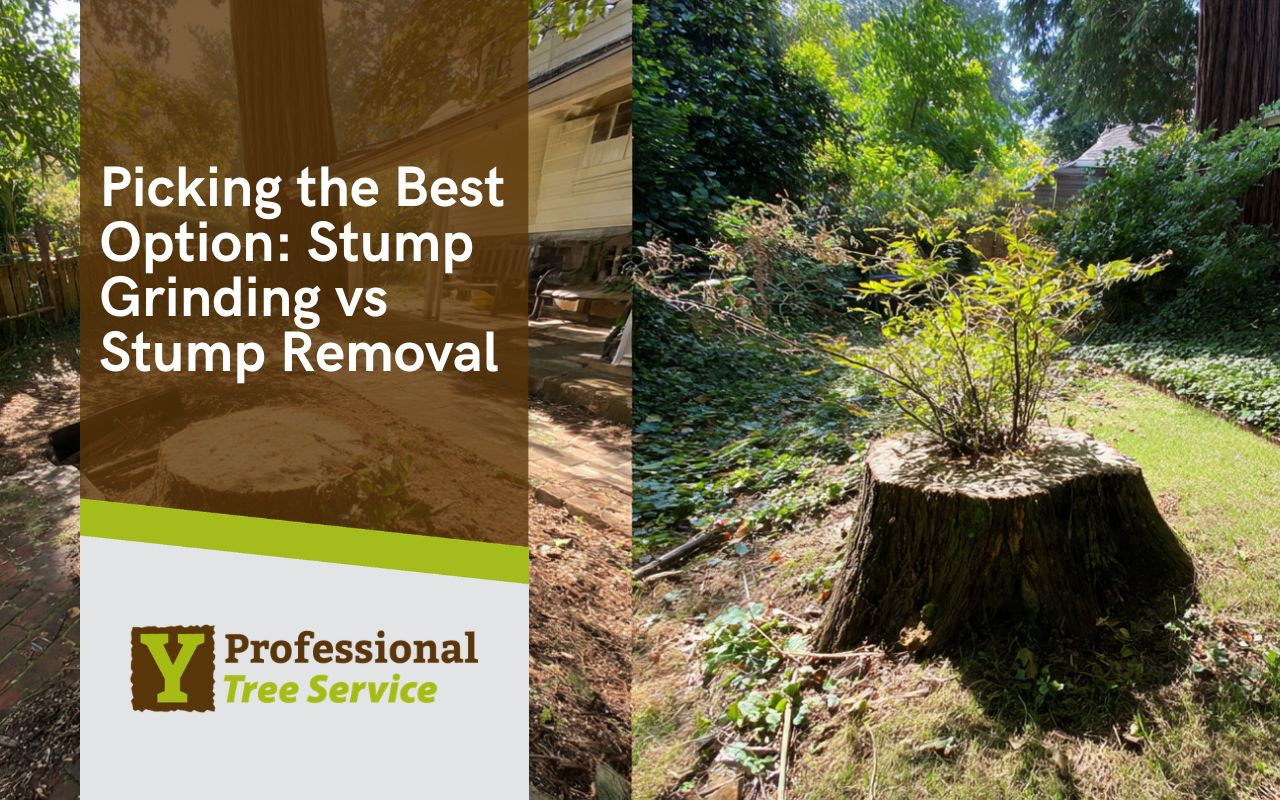
Stump grinding vs stump removal is a common question after a tree comes down. A stump can block mowing, attract pests, and ruin the look of your yard. In this guide, you will see how each method works and what it changes in your landscape.
Stump grinding vs stump removal also affects depth of grind, regrowth prevention, and replanting plans. Y Professional Tree Service helps homeowners choose the best fit for their yard and long-term goals.
Stump Grinding: A Fast and Low-Impact Choice
Stump grinding breaks the stump into small wood chips with a machine that spins a cutting wheel. It removes the visible stump and part of the roots near the surface. Because it avoids heavy digging, it usually keeps your lawn in better shape.
Stump grinding vs stump removal often comes down to how much disturbance you can accept. Grinding is popular when you want a quick change and you do not need the entire root system gone.
- Removes the stump above ground and grinds below the surface
- Creates wood chips that you can reuse as mulch
- Often finishes in a shorter visit than full extraction
If you want to explore related help for yard recovery, review tree care and cleanup services offered by Y Professional Tree Service.
Pros and Cons of Stump Grinding
Grinding is usually faster and causes less digging. Therefore, it can be a strong choice for many residential yards. Also, it can be easier on nearby plants and hardscape.
- Pros: quick turnaround, less soil disruption, wood chips can be reused
- Cons: some roots remain, soil may settle later, deep replanting can be harder
Even so, stump grinding does not remove every root. Over time, leftover root pieces can decay and create small dips. Because of that, you may want to top off the area with soil before reseeding.
Depth of Grind: How Deep Is Enough?
The depth of grind often ranges from 6 to 12 inches below the surface. However, the best depth depends on soil type and what you plan to do next. If you want grass, a standard depth may work well.
On the other hand, if you want replanting in the same spot, you may need a deeper grind or a different plan. Stump grinding vs stump removal becomes important here, because removal clears more space for larger roots.
- Shallow grind: good for lawn restoration and light landscaping
- Standard grind: helps reduce sprouting from surface roots
- Deeper grind: better when you need more room near the root zone
Regrowth Prevention: Keeping Shoots from Coming Back
Regrowth prevention matters if the tree species is known to sprout. With grinding, small root sections may remain alive for a while. As a result, some yards see new shoots in the next season.
To improve regrowth prevention, you can monitor the area and act quickly if sprouts appear. Also, adding topsoil and replanting grass can reduce light and space that shoots need. Stump grinding vs stump removal is a key choice when zero regrowth risk is the priority.
- Watch for sprouts during the next growing season
- Fill the grind area with topsoil to level the surface
- Reseed or plant ground cover to stabilize the soil
Impact on Your Landscape After Grinding
Grinding leaves wood chips and a shallow hollow. You can spread chips as mulch, although too many chips in one spot may slow grass growth. Therefore, many homeowners remove some chips and mix in topsoil.
Because the ground can settle, it helps to check the area after rain. Then, add soil as needed to keep the yard level and safe for mowing. Y Professional Tree Service can advise on the best cleanup steps for your site.
Stump Removal: Full Extraction for a Clean Start
Stump removal pulls the stump and the main root pieces out of the ground. It requires digging, cutting roots, and often heavier tools. That work is more disruptive, yet it gives you the clearest space afterward.
Stump grinding vs stump removal becomes an easy decision when you want a full reset. For example, removal may fit better if you plan hardscaping, construction, or large replanting in the same location.
- Removes stump and major roots rather than grinding them down
- Leaves a larger hole that must be filled and leveled
- Best when you need open space for a new project
If your tree was taken down as part of a bigger project, you may also want to review tree removal support in Huntsville and Decatur, AL from Y Professional Tree Service.
Pros and Cons of Stump Removal
Removal gives a true clean slate. So, it helps when you need to build, regrade, or plant something large. Also, it can reduce the chance of future root problems near patios or walkways.
- Pros: full clearance, better for major replanting, lowers long-term root concerns
- Cons: more digging, more cleanup, larger area to repair afterward
Still, removal can affect nearby landscaping. Therefore, it is wise to plan for soil replacement, grading, and reseeding once the stump is out.
How Deep Does Stump Removal Go?
Removal depth often reaches 12 to 24 inches, and sometimes more. It depends on how far the main roots spread and how the soil holds them. Sandy soil may release roots more easily, while clay can slow the work.
Because removal clears deeper space, it can support replanting with larger shrubs or trees. In contrast, grinding may leave buried wood that can interfere with deeper root growth.
Regrowth Prevention with Full Removal
When the stump and root collar are removed, regrowth prevention is much easier. That is because the key growth points are gone. Afterward, you can backfill with quality soil, compact in layers, and level the ground.
Then, you can reseed or move into replanting with fewer worries. This is why stump grinding vs stump removal often favors removal when sprouting is a major concern.
Frequently Asked Questions
Which is usually faster, stump grinding or stump removal?
Grinding is often faster because it avoids major digging. However, access and stump size can change timing.
Does stump grinding stop regrowth completely?
It reduces the stump, but some roots can remain alive. So, regrowth prevention may require monitoring and quick action.
How does depth of grind affect my plans?
A deeper grind can help with lawn leveling and small plantings. Still, full removal may be better for deep replanting.
Can I plant a new tree where the stump was?
Replanting is possible, yet it depends on remaining roots and soil quality. Removal often gives the cleanest space for larger trees.
How do I know which option fits my yard?
Think about soil disruption, future projects, and regrowth prevention goals. Y Professional Tree Service can help you compare options on site.
Making the Right Call for Your Yard
Stump grinding vs stump removal depends on what you want next. If you want a quick fix with less digging, grinding often fits. If you want a complete reset for building or major replanting, removal can be worth it.
For help planning your next step, reach out to Y Professional Tree Service. Y Professional Tree Service can review your site and guide the safest, cleanest approach.
Conclusion
Stump grinding vs stump removal is not one-size-fits-all. Grinding is faster and gentler on the yard, while removal clears the space fully. Your choice should match your timeline, landscape goals, and regrowth prevention needs.
With the right plan, your yard can be level, safe, and ready for replanting. Y Professional Tree Service can help you move forward with confidence.