
Planting a tree near your home needs care. The right space protects your yard and your structure. In this guide, Y Professional Tree Service explains safe placement, root behavior, and simple steps that support healthy growth and a safer home.
How Far Should a Tree Be From Your Foundation?
The best tree distance from house foundation depends on tree size, root habits, and soil conditions. In most cases, small trees need at least 10 feet, while larger trees need 15 to 25 feet or more. Therefore, smart planning helps protect foundation safety and supports healthy growth.
Why proper spacing matters
Choosing the correct tree distance from house foundation helps prevent future damage. Even beautiful trees can create stress near a home when roots grow too close. As a result, careful placement protects your landscape and your structure.
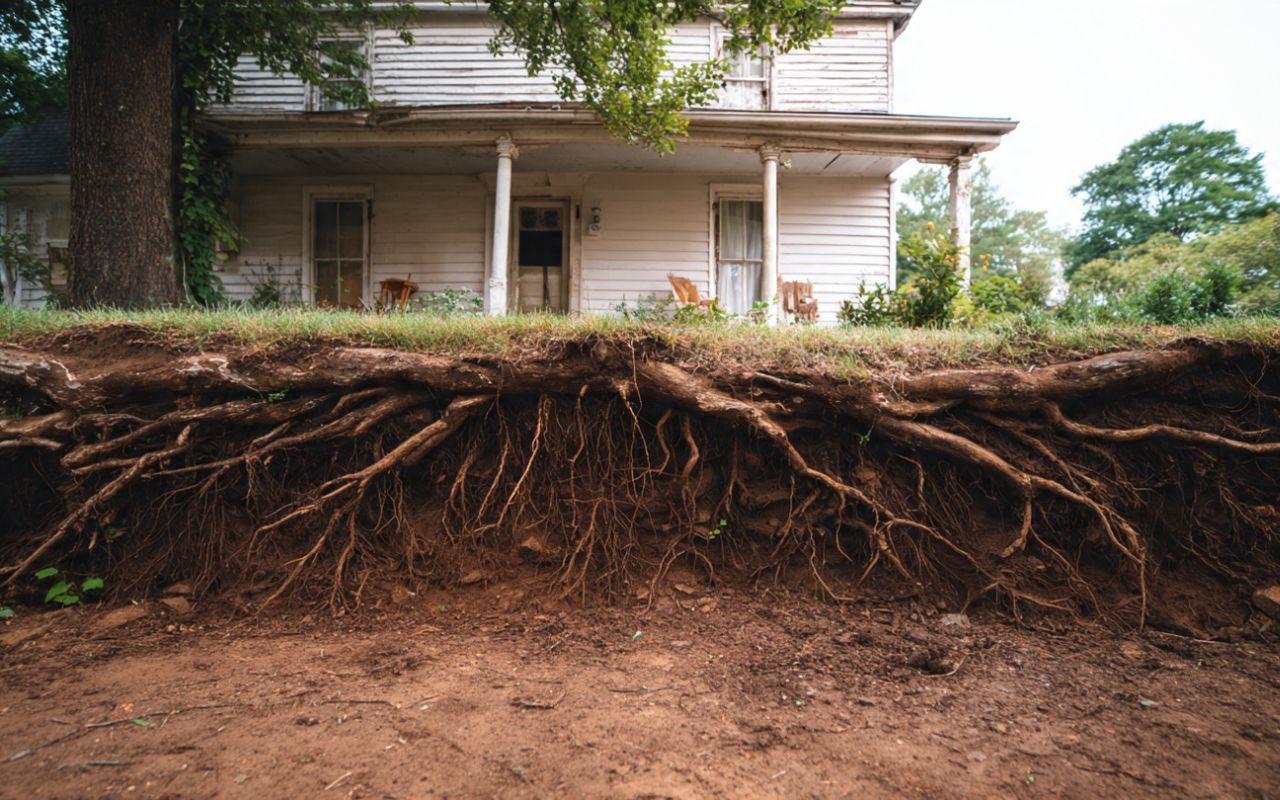
Tree roots near house areas often follow water and loose soil. Because of that, they may move toward weak spots, pipes, or cracks. Over time, this movement can affect foundation safety and increase repair needs.
- It lowers the chance of cracks in walls or floors.
- It helps reduce moisture changes around the base of the home.
- It gives roots room to grow without crowding the structure.
Y Professional Tree Service often reminds homeowners that early planning is easier than later repairs. In the same way, a smart planting distance supports long-term peace of mind.
Tree roots affect a foundation
Root systems do not all grow the same way. Some stay shallow and wide, while others go deeper. Still, root spread can become a problem when the tree is planted too near the home.
Roots usually seek water, air, and open soil. Therefore, they may move toward places where water collects near a slab or footing. If small cracks already exist, roots can make those weak points worse.
However, roots do not always break strong concrete by force. In many cases, they take advantage of weak areas, shifting soil and making damage more visible. That is why tree distance from house foundation matters from the start.
Common risks of planting too close
Close planting can cause several issues over time. First, roots may disturb soil levels under or beside the home. Next, nearby trees may increase moisture problems around crawl spaces or basements.
- Uneven settling near the structure
- Cracks in interior walls
- Sticking doors or windows
- Pressure on underground pipes
- More moisture near shaded walls
In addition, some fast-growing species have stronger root spread than others. So, foundation safety depends on both spacing and species choice.
What is a safe planting distance?
A safe planting distance depends on mature size. As a basic guide, small ornamental trees should sit at least 10 feet away. Medium trees usually need 15 to 20 feet. Large shade trees often need 20 to 25 feet or more.
Some species need even more room. For example, willows and poplars may require 30 feet or more because of aggressive root spread. Therefore, the ideal tree distance from house foundation is never one-size-fits-all.
- Small trees: at least 10 feet
- Medium trees: 15 to 20 feet
- Large trees: 20 to 25 feet or more
Y Professional Tree Service recommends looking at mature height, canopy width, and root habits before planting. Also, local soil conditions can change how roots move.
Choose better trees near a home
The best tree for a small yard is not always the fastest-growing one. Instead, choose species with less aggressive roots and moderate growth. This helps lower the risk of tree roots near house foundations.
Look for trees that fit your lot size and local climate. Also, think about sun, water, and future maintenance. A smart match improves foundation safety and supports stronger tree health.
For local ideas, explore Native Trees in Alabama | A Complete Guide to Plant & Care. You can also read Best Time to Plant Trees in Alabama for seasonal guidance.
How to plant a tree with safer spacing
Good planting habits help reduce future problems. Therefore, follow a simple process before you dig.
- Measure the distance from the trunk location to the foundation.
- Check the tree’s mature size, not its current size.
- Review root spread and water needs for that species.
- Locate pipes, utility lines, and drainage areas.
- Choose a spot with enough room for long-term growth.
- Mulch the base lightly and water evenly after planting.
After planting, monitor growth each year. If needed, ask Y Professional Tree Service to inspect the site and guide future care.
Warning signs that roots are getting too close
Early signs often appear slowly. Even so, quick action can help prevent larger issues.
Watch for small cracks in walls, gaps near frames, and floors that seem uneven. Also, note doors or windows that suddenly stick. These signs do not always mean root damage, but they should not be ignored.
Outside, look for raised soil, exposed roots, or changes in drainage. If you notice these issues, foundation safety should be checked as soon as possible.
Ways to protect your home over time
Prevention is always better than repair. So, use simple steps to manage risk before roots become a major issue.
Root barriers can guide growth away from the structure. In some cases, careful pruning may help. However, root cutting should be done by trained professionals because poor cuts can harm the tree.
Regular inspections also matter. In addition, proper drainage helps keep water from collecting near the base of the home. For more tree care help, visit the Tree Care Blog.
FAQs
How close can a small tree be to a house?
Small trees should usually be planted at least 10 feet away. However, the final planting distance depends on mature size and root spread. For more local tree care tips, visit the Tree Care Blog.
Can tree roots near house walls crack a foundation?
They can increase risk when roots reach weak spots, loose soil, or leaking areas. Therefore, early spacing and regular checks support better foundation safety. For help with planning, go to Contact Us.
What trees need the most space from a home?
Large and fast-growing species often need the most room. Trees with broad root spread, such as willow or poplar, may need 30 feet or more. For planting ideas, read Native Trees in Alabama | A Complete Guide to Plant & Care.
Does soil type change the ideal planting distance?
Yes, it can. Clay soils, wet areas, and poor drainage may increase movement around roots and foundations. Because of that, site conditions matter. For seasonal guidance, check Best Time to Plant Trees in Alabama.
When should I call an arborist about root concerns?
You should call when you see cracks, sticking doors, uneven floors, or exposed roots near the house. A trained expert can review root spread and planting distance. Y Professional Tree Service can help through the Contact Us page.
Final thoughts on safe tree placement
The right tree distance from house foundation helps protect your home, your soil, and your landscape. When you plan for mature size, root spread, and planting distance, you reduce risk and improve foundation safety.
Y Professional Tree Service believes smart tree placement creates a better yard for years to come. So, choose species carefully, watch for early signs, and get expert help when needed. With the right plan, your trees and home can grow well together.
Trusted references for homeowners
Editorial sources also note that some trees with aggressive roots can threaten nearby structures, especially when planted too close. See Real Simple and Better Homes & Gardens for additional homeowner guidance.