
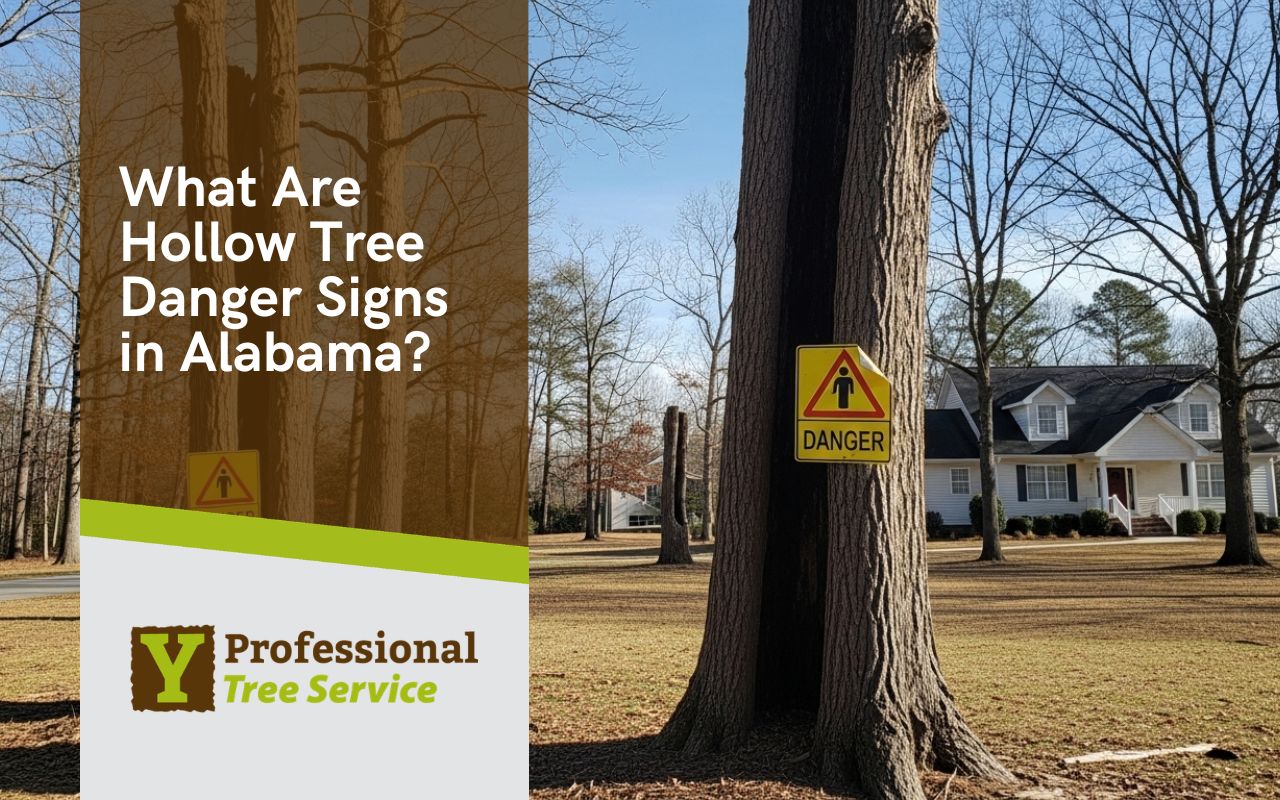
Trees can look strong from the outside and still fail inside. That is why hollow tree danger signs in Alabama matter. A hidden hollow trunk or tree cavity can lead to sudden falls. This guide helps you spot risk early and protect your home, family, and yard.
What Are Hollow Tree Danger Signs in Alabama?
Hollow tree danger signs in Alabama often appear before a tree falls. However, many signs are easy to miss. A tree may still have leaves and look healthy. Even so, inner decay can create structural weakness. That is why regular checks matter for safe outdoor spaces.
Early Warning Signs Help You Act Before Damage Starts
The first step is knowing what to watch for. In many yards, the danger starts with small changes. Then, those changes grow worse after rain, wind, or heat.
- A dark opening in the trunk can point to a tree cavity.
- Soft bark or missing bark may show decay under the surface.
- Mushrooms near the base often signal rot inside the wood.
- A hollow sound when you tap the trunk may suggest lost inner support.
These signs do not always mean the tree will fail today. Still, they do show that the tree needs closer care. Hollow tree danger signs in Alabama deserve fast attention when the tree stands near a house, driveway, fence, or play area.
Weather in Alabama Increases Risk Around Weak Trees
Alabama weather can make tree problems worse. Heavy rain can soak damaged wood. Strong winds can push a weak tree too far. Storms can also open cracks that let more moisture in.
A hollow trunk may hold less weight than it once did. As a result, large limbs may snap first. In other cases, the whole trunk may lean or split. If you also see lifted soil near the roots, the risk gets higher.
Because of this, homeowners should check trees after every major storm. You can also read Tree Removal Signs in Alabama: A Quick Guide for more signs that call for fast action.
Visible Decay Shows Structural Weakness More Clearly
Some warning signs are easier to see than others. When decay spreads, the tree often gives visual clues. Therefore, a simple walk around your yard can reveal a lot.
- Wide cracks in the trunk
- Dead branches high in the crown
- Sawdust-like material near the base
- Wet spots or sap leaking from bark
- Large cavities where wood is missing
Each sign can point to structural weakness. A tree cavity can grow deeper with time. Also, a hollow trunk can leave only a thin outer shell holding the tree up. That shell may not stay stable during the next storm.
If your tree also looks stressed, visit How to Save a Dying Tree: An Expert Guide to learn when a tree may improve and when it may not.
A Simple Risk Assessment Supports Better Safety Decisions
A basic risk assessment helps you decide what to do next. You do not need special tools to start. Instead, begin with location, size, and clear warning signs.
- Check if the tree leans toward your home or car.
- Look for roots lifting soil or breaking above ground.
- Notice whether children or guests walk near the tree often.
- Watch if the hollow area grows after wet weather.
A tree with a small cavity in an open corner may pose less danger. However, a large tree cavity above a roof or sidewalk needs faster review. Risk assessment is not only about the tree. It is also about what the tree could hit.
Safe Steps Make How-To Inspection Easier at Home
You can do a simple yard check in a few minutes. This how-to step helps you spot trouble early. Still, keep both feet on the ground and stay back from unstable trees.
- Walk around the full tree and look at the trunk, roots, and crown.
- Look for openings, soft wood, fungi, or missing bark.
- Tap the trunk lightly and listen for a hollow sound.
- Check the ground for fresh cracks, lifted soil, or fallen limbs.
- Take photos so you can compare changes over time.
After that, decide whether the tree needs expert help. Y Professional Tree Service can help when warning signs feel too serious to ignore. For general updates and care tips, browse Blog – Y Professional Tree Service – Tree Tips and Information.
Wildlife Value Can Be Balanced With Property Safety
Some hollow trees support birds, bats, and squirrels. So, not every hollow tree must come down at once. In fact, some trees remain standing for years with proper review.
Even so, safety comes first near homes and busy areas. A hollow trunk close to a roof or swing set may create too much risk. In that case, a careful risk assessment helps balance habitat value with daily safety.
Y Professional Tree Service may suggest pruning, support systems, or removal based on the tree’s condition and location. The right choice depends on how much solid wood remains and what sits nearby.
Frequently asked questions
How can I tell if a hollow tree is dangerous?
A dangerous tree often shows cracks, fungi, dead limbs, or a large opening in the trunk. If you also see lean or root movement, review Tree Removal Signs in Alabama: A Quick Guide for related warning signs.
Can a hollow trunk still support a tree?
Sometimes it can, but it depends on how much solid wood remains. A hollow trunk with a thin outer shell may fail sooner. If the tree also looks stressed, read How to Save a Dying Tree: An Expert Guide for added context.
What does fungal growth on the bark mean?
Fungi often mean decay is active inside the wood. That does not prove failure today, but it does raise concern. You can compare symptoms with the tips in Blog – Y Professional Tree Service – Tree Tips and Information.
When should I ask for a professional risk assessment?
You should ask for a risk assessment when the tree stands near your home, driveway, or play area. Also, call when you notice a tree cavity, lean, or sudden limb drop. Y Professional Tree Service offers help through Contact Information.
Can a hollow tree be saved instead of removed?
In some cases, yes. Pruning or support work may lower risk when decay is limited. However, removal may be safer when structural weakness is severe. The best next step is to use Contact Information and request an expert review.
Trusted Sources Support Smarter Tree Care Choices
Good decisions work best when they mix local help with trusted research. For example, Virginia Tech explains that tree failure risk depends on tree condition, site factors, and force on the tree. Also, published research in Nature notes that cavities alone do not tell the full story, so careful risk assessment matters. Y Professional Tree Service can help turn those signs into a safer plan for your property.
- Chapter 11: Structural Defects, Tree Failure, and Risk
- Potential hazard characteristics of trees with hollows, cavities and fruiting bodies of fungi