Choosing between full clearing and targeted removal can shape your whole project. This guide explains lot clearing vs selective tree removal in Huntsville and Decatur in simple terms. It helps you protect your land, plan better, and make a smart next step with Y Professional Tree Service.
What Is Best for Property Prep in Huntsville and Decatur?
For many large projects, lot clearing gives you a clean start. It removes heavy brush, small growth, and problem trees. As a result, crews can move faster and work with fewer delays.
This option often works well when lot clearing vs selective tree removal in Huntsville and Decatur depends on speed. It also helps when the land needs grading, drainage work, or a new foundation.
- It opens the full site for easier access.
- It supports faster grading and foundation work.
- It reduces hidden roots, brush, and old debris.
When the goal is full property prep, land clearing can be the easier path. Even so, each site should be reviewed before work begins.
Selective tree removal helps preserve mature trees
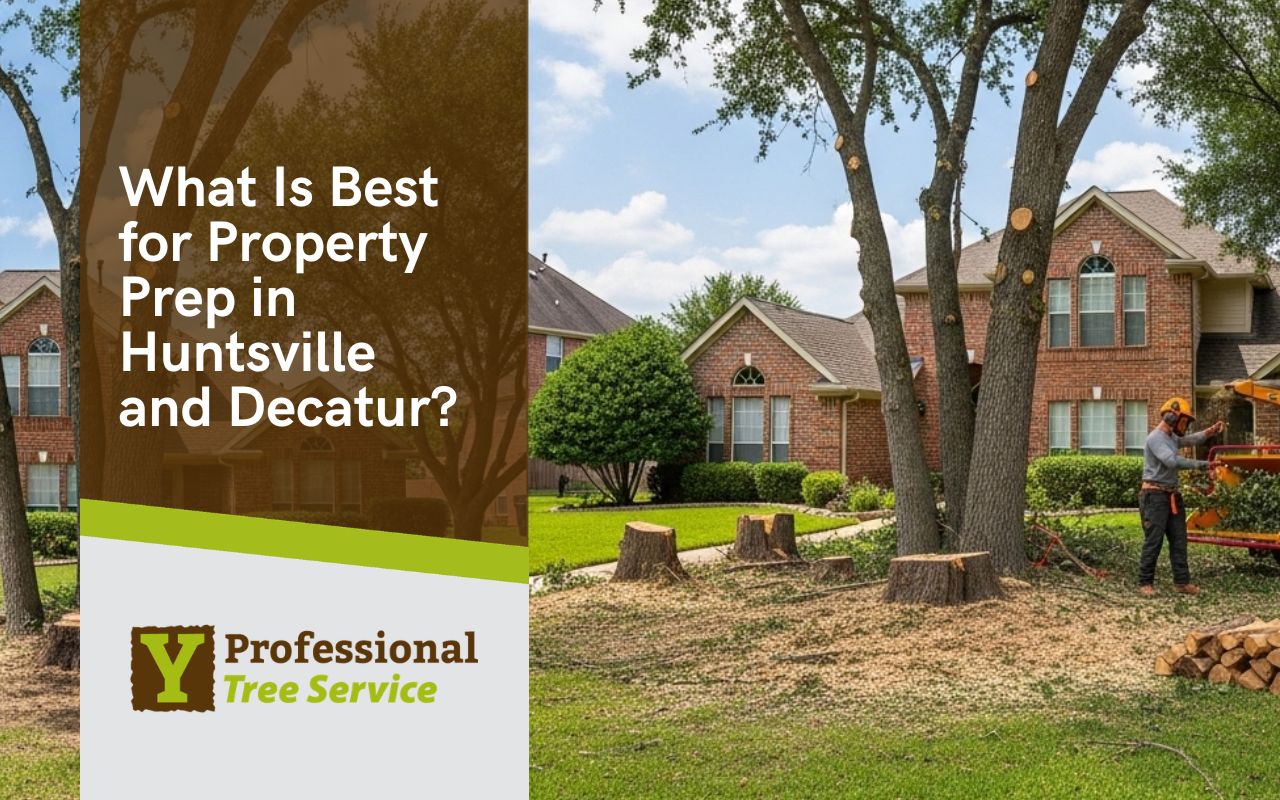
Selective tree removal means taking out only the trees that block progress, create risk, or hurt the layout. Because of that, you can preserve mature trees and still improve the site.
This choice is often better when beauty, shade, and privacy matter. It also fits projects that want a softer look after construction. In many cases, lot clearing vs selective tree removal in Huntsville and Decatur comes down to how much natural character you want to keep.
- It keeps healthy trees that add shade and comfort.
- It protects the look of the yard and lot lines.
- It supports wildlife and a more natural setting.
Y Professional Tree Service can help property owners review which trees support the plan and which ones should go.
Environmental results change with each removal choice
Full clearing can disturb more soil and remove more cover. Therefore, it may increase erosion risk if the site is left open too long. By contrast, selective work leaves more roots in place and helps hold soil together.
It can also help preserve mature trees that support shade and local habitat. That matters when you want strong property prep without losing every natural feature. Because of this, lot clearing vs selective tree removal in Huntsville and Decatur is not only a building choice. It is also a land care choice.
Costs become easier to manage with solid removal planning
Cost matters on every project. Full clearing may cost more at the start, yet it can reduce delays later. Selective work may protect key trees, but it can take more planning and careful labor.
Good removal planning helps you compare both options. It looks at slope, tree count, brush density, access, hauling, and cleanup. As a result, you can avoid surprise costs and choose the right scope.
- Review tree size and site access first.
- Plan for debris removal and cleanup.
- Match the work scope to the final build goal.
If you want to understand related service factors, read tree removal costs.
Local rules and site goals should guide the final decision
Before work starts, check for local permit needs and site limits. Some properties may need extra care near edges, slopes, or drainage areas. Because of that, early review is always a smart step.
Removal planning should also match your final use of the property. A new build may need open space. A home update may only need safer views, better light, or room for a driveway. Y Professional Tree Service works with owners who want a clear plan before cutting begins.
How to choose the right approach for your land
You can make a better choice by looking at your land in steps. This simple process helps align your budget, site goals, and long-term use.
- Define the main goal for the property.
- Mark the trees that add shade, privacy, or value.
- Identify trees that block access or create risk.
- Review soil, slope, and drainage needs.
- Build a removal planning outline before work starts.
If safety is part of your decision, review how to safely remove trees and safe tree removal tips.
FAQs about lot clearing and selective tree removal
What is the main difference between lot clearing and selective tree removal?
Lot clearing removes most or all vegetation for a clean site. Selective tree removal takes out only chosen trees. Therefore, the better option depends on your layout, timeline, and property prep goals.
When should I preserve mature trees on a property?
You should preserve mature trees when they add shade, privacy, curb appeal, or soil support. This is often useful for homes, yard updates, and projects that want a more natural finish.
Does selective tree removal still support land clearing goals?
Yes, it can. Selective work can open the space you need while keeping important trees in place. That balance often works well when lot clearing vs selective tree removal in Huntsville and Decatur is a close decision.
What should removal planning include before work starts?
Removal planning should include tree health, access, debris cleanup, soil conditions, and the final use of the land. It should also review safety steps and the order of the work.
How can I speak with a local team about my property?
The best next step is to contact our team. Y Professional Tree Service can review your site, explain your options, and help you move forward with confidence.
The right choice protects both your project and your land
Every property has different needs. Still, the best results come from clear goals and careful review. When comparing lot clearing vs selective tree removal in Huntsville and Decatur, think about access, timeline, budget, and the trees worth keeping.
If you need full land clearing for a new build, a blank site may make sense. If you want to preserve mature trees and keep natural beauty, selective work may be the better fit. In either case, Y Professional Tree Service can help you plan the next move. For direct help, contact our team today.
Editorial sources also note that tree loss can increase erosion and reduce broader environmental benefits. You can review this in National Geographic and Britannica.