
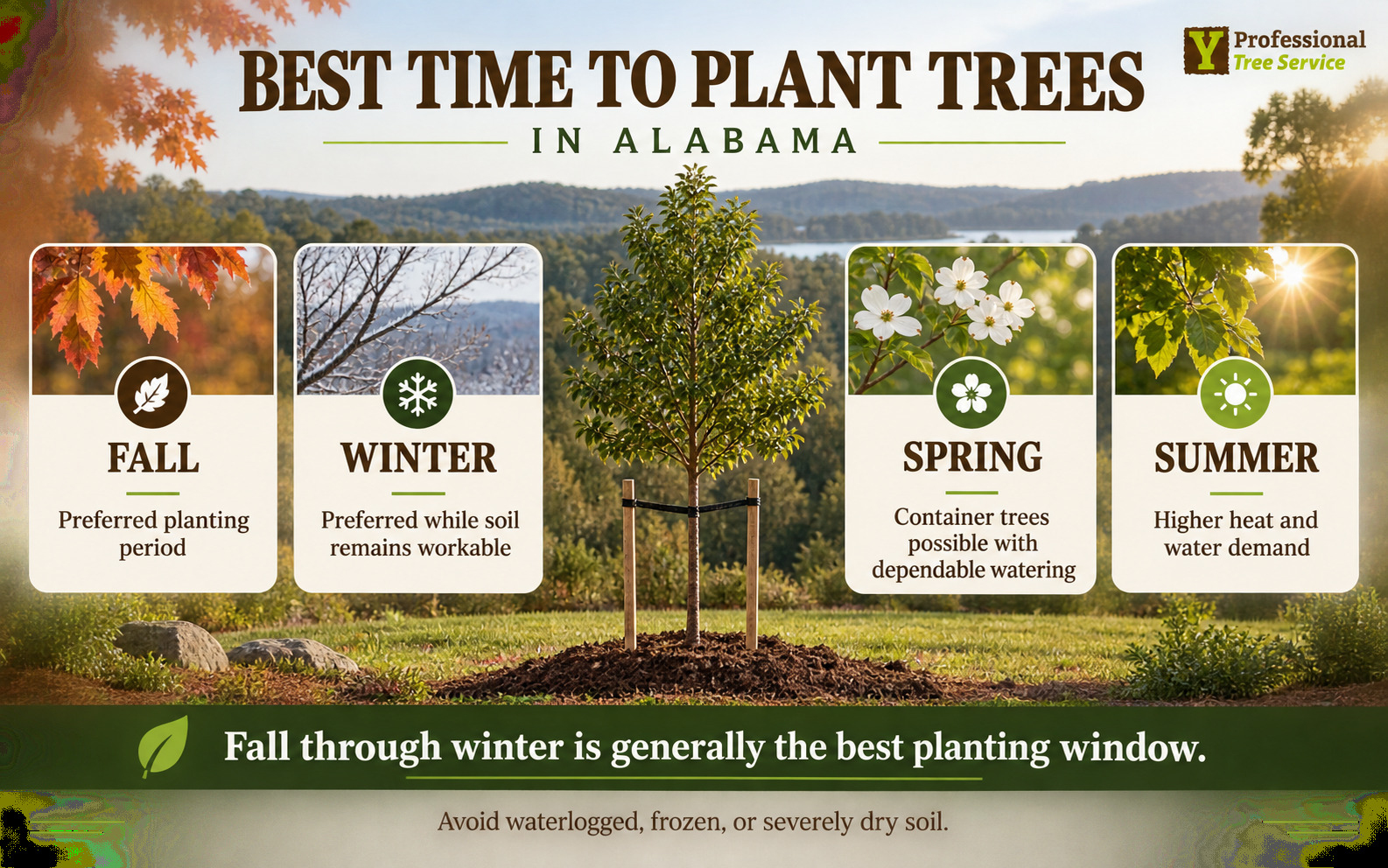
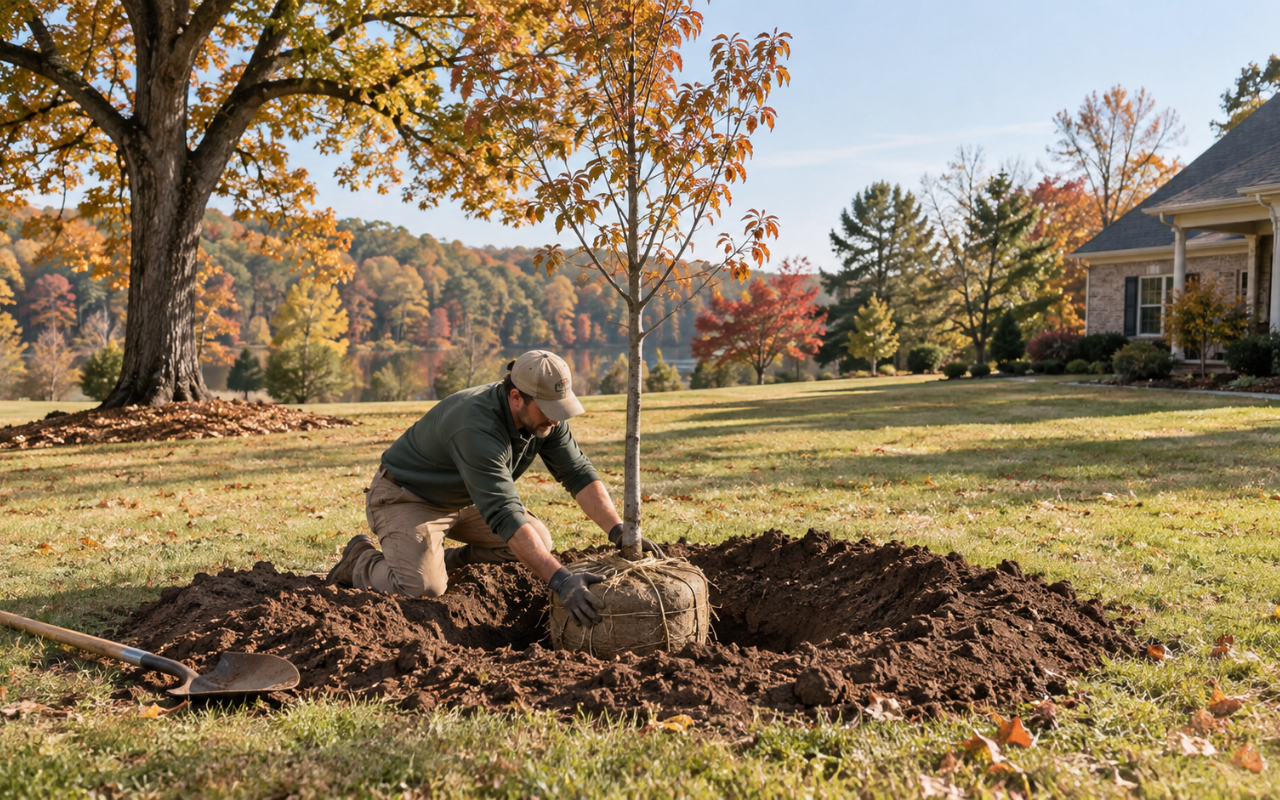
Fall through winter is generally the best time to plant trees in Alabama, especially for bare-root and balled-and-burlapped trees. Cooler weather reduces transplant stress and water demand while roots begin establishing. Container-grown trees may be planted during other seasons when dependable irrigation is available. For property-specific support, explore professional tree services.
At Y Professional Tree Service, we recommend matching the planting schedule to the tree, property, and regional weather. Northern, central, and southern Alabama do not always experience identical conditions. Therefore, homeowners should use seasonal guidance instead of relying on one fixed statewide planting date.
Alabama’s Best Seasonal Window for Planting New Trees
Fall and winter provide favorable conditions for many tree planting projects. Air temperatures are cooler, trees enter dormancy, and moisture is usually easier to manage than during Alabama’s hotter months.
Alabama Extension identifies fall and winter as preferred planting periods, particularly for bare-root and balled-and-burlapped trees. Its current tree selection and planting guidance also explains that container-grown trees can be installed at other times with adequate watering.
Avoid planting in waterlogged, frozen, or severely dry soil. Waiting for workable conditions is usually more valuable than following a specific calendar date.
Fall and Winter Advantages for Strong Root Establishment
Cooler air reduces moisture loss through foliage and lowers heat stress. Meanwhile, soil may remain warm enough for roots to begin extending beyond the original root ball.
Fall planting also gives many deciduous trees time to focus on below-ground development. By spring, established roots can support emerging leaves and new canopy growth more effectively.
- Lower heat stress: Cooler air places less strain on newly planted trees.
- Reduced water demand: Moisture is often easier to maintain during cooler seasons.
- Root development: Roots can begin establishing before vigorous spring growth.
- Easier monitoring: Slower top growth makes early care more manageable.
Regional Weather Differences Across Alabama Planting Areas
Alabama’s climate varies from northern counties to the Gulf Coast. Northern areas may experience freezing conditions earlier, while southern locations often have a longer planting window.
Instead of planting exactly six weeks before a predicted frost, monitor local weather and soil conditions. A dormant, site-appropriate tree can often be planted during fall or winter whenever the ground remains workable.
Species selection also affects timing and performance. To compare trees suited to local conditions, review native tree options before purchasing nursery stock.
Ideal Site Conditions for Successful Alabama Tree Planting
Alabama properties do not share one universal soil type. Some sites drain quickly, while others contain compacted clay, shallow topsoil, or areas where water collects.
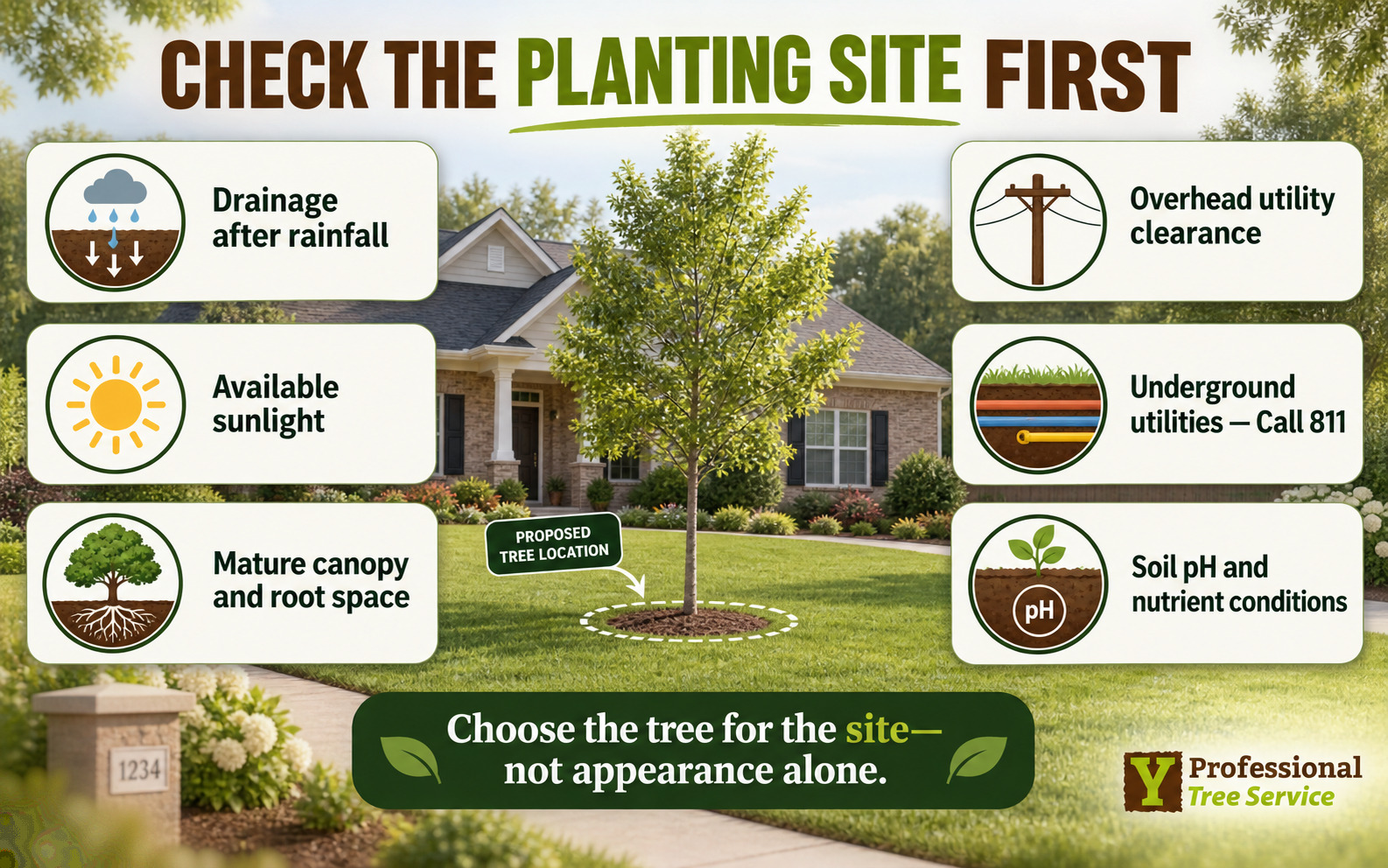
Evaluate sunlight, drainage, mature tree size, utility clearance, and available root space. A species requiring full sun may struggle in shade, while a moisture-sensitive tree may decline in poorly drained soil.
- Observe how quickly water drains after rainfall.
- Match sunlight levels to the selected species.
- Allow space for the mature canopy and roots.
- Avoid planting large trees beneath utility lines.
- Call 811 before digging near underground utilities.
A soil test can identify pH and nutrient conditions before planting. Add lime, fertilizer, or other amendments only when testing and species requirements support them.
Selecting Tree Species for Long-Term Landscape Success
Tree selection should begin with the planting site rather than appearance alone. Mature size, drainage tolerance, sunlight, maintenance needs, and nearby structures determine whether a tree fits the property.
Native and climate-adapted trees may perform well when matched to suitable conditions. Oaks, maples, magnolias, hollies, river birches, and longleaf pines each have different site requirements. No species is automatically appropriate for every Alabama landscape.
Container, Bare-Root, and Balled Tree Planting Differences
| Tree Stock | Preferred Timing | Main Concern | Useful Preparation |
|---|---|---|---|
| Container-grown | Fall or winter preferred; other seasons possible | Circling roots and rapid drying | Water the container and inspect the root system |
| Bare-root | Dormant fall or winter period | Roots drying before planting | Keep roots moist and plant promptly |
| Balled-and-burlapped | Fall or winter preferred | Heavy root ball and hidden wrapping | Handle through the root ball, never the trunk |
Container trees retain more roots but may develop circling growth. Bare-root trees require careful moisture management. Balled-and-burlapped stock can be heavy and may require specialized equipment.
Correct Planting Depth and Root-Flare Placement
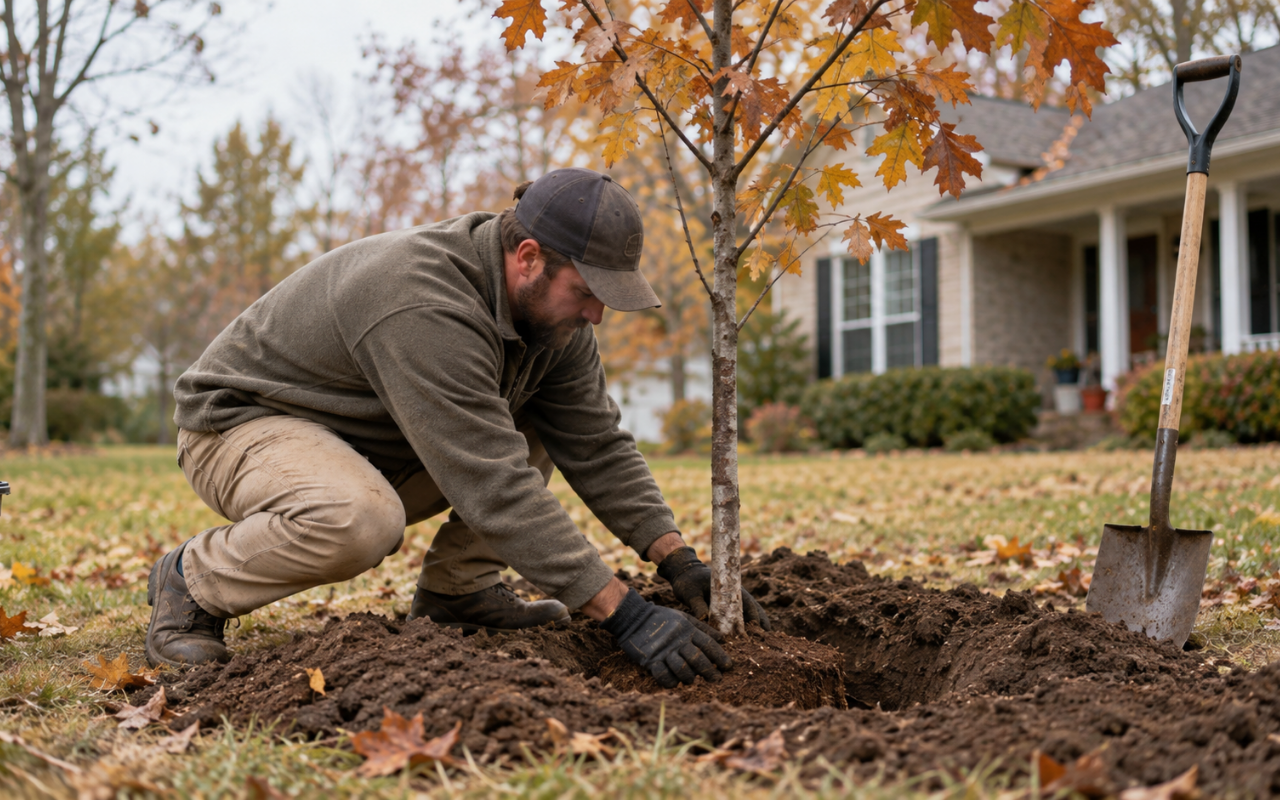
Planting too deeply is one of the most damaging installation mistakes. Identify the uppermost lateral root and keep it near the surrounding soil level. The trunk should not emerge from the ground like a straight pole.
Dig a wide hole, but do not make it deeper than the root ball. Wide soil preparation encourages lateral root expansion, while an overly deep hole can settle and bury the root flare.
Backfill with loosened site soil unless broader soil improvement is necessary. Avoid filling one isolated hole with rich compost because the difference in soil texture can interfere with moisture movement.
Watering and Mulching During Early Tree Establishment
Newly planted trees need consistent moisture around the original root ball. However, saturated soil can limit oxygen and damage roots. Check moisture beneath the surface before adding more water.
Alabama Extension recommends frequent irrigation immediately after planting, followed by gradually wider and less frequent watering as roots expand. Tree size, rainfall, drainage, and season should guide adjustments.
- Apply water slowly so it reaches the root ball.
- Reduce watering when the soil remains saturated.
- Expand the watering area as roots develop.
- Use approximately three inches of mulch over the root area.
- Keep mulch away from direct trunk contact.
Frequently Asked Questions
When should homeowners plant trees in northern Alabama?
Fall and winter are generally favorable when the soil remains workable. Monitor local freezes, rainfall, drainage, and the needs of the selected tree instead of relying on one date.
Can container-grown trees be planted during spring?
Yes. Container trees can be planted during spring when consistent watering is available. However, they may face increasing heat and water demand as summer approaches.
Should compost be added directly inside the planting hole?
Avoid creating one heavily amended pocket. When soil improvement is needed, incorporate suitable material across a broad area rather than changing only the planting hole.
How frequently should a newly planted tree receive water?
New trees usually need frequent watering initially. Adjust the schedule according to trunk size, rainfall, soil moisture, drainage, temperature, and establishment progress.
Does every newly planted tree need support stakes?
No. Stake only when the root ball is unstable or wind causes excessive movement. Supports should allow slight trunk movement and should not remain indefinitely.
Common Planting Mistakes That Limit Healthy Tree Growth
Several common mistakes can reduce establishment even when seasonal timing is appropriate. Incorrect depth, unsuitable species selection, and inconsistent watering create greater problems than missing a narrow planting date.
- Burying the root flare below surrounding soil
- Selecting a tree without checking mature size
- Planting in soil with unsuitable drainage
- Adding excessive fertilizer during the first year
- Piling mulch against the trunk
- Leaving circling roots uncorrected
- Staking a stable tree unnecessarily
First-year pruning should generally remain limited to dead, rubbing, or broken branches. Excessive pruning can remove foliage the tree needs while establishing roots.
Enhancing Alabama Landscapes Through Thoughtful Tree Placement
Strategic placement can improve shade, privacy, visual balance, and outdoor comfort. Large shade trees need generous space, while smaller ornamental trees may complement patios, walkways, and entry areas.
Consider how the landscape will function after the tree matures. Roots, falling leaves, fruit, seasonal flowers, and canopy density may influence its suitability near hardscapes and structures.
At Y Professional Tree Service, we evaluate the planting area before recommending placement. Our team considers space, drainage, sunlight, access, and the long-term relationship between the tree and surrounding property.
Using Alabama’s Cooler Seasons for Better Establishment
Fall and winter remain practical planting periods because they reduce heat stress and support manageable watering. Still, successful establishment depends on site conditions, correct depth, root preparation, and continued care.
Understanding the best time to plant trees in Alabama provides a useful starting point, but timing cannot correct poor drainage or an unsuitable species. At Y Professional Tree Service, we help property owners plan for healthier long-term growth.
If you need help choosing a location or installing a new tree, request your planting estimate.
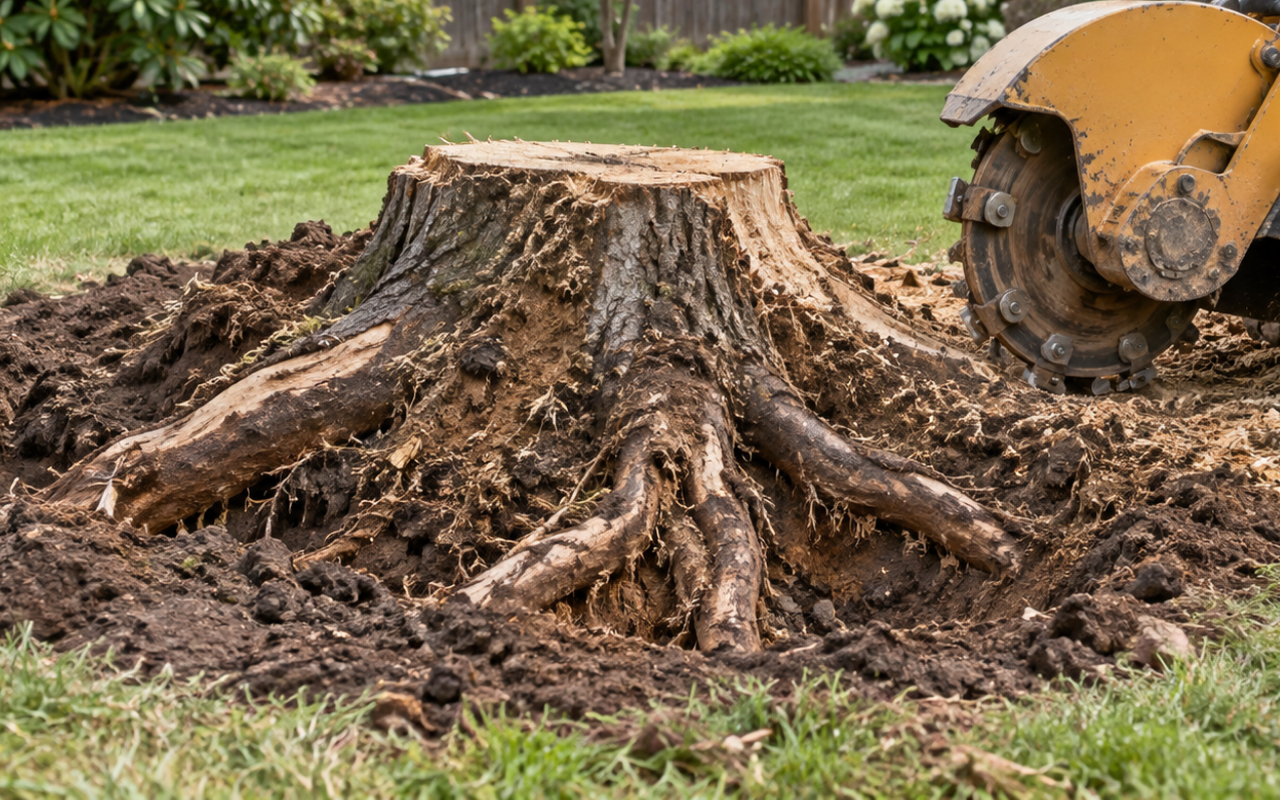
Clearing space before you plant? Our Huntsville tree service can remove old trees and stumps so your new planting gets a clean start.