
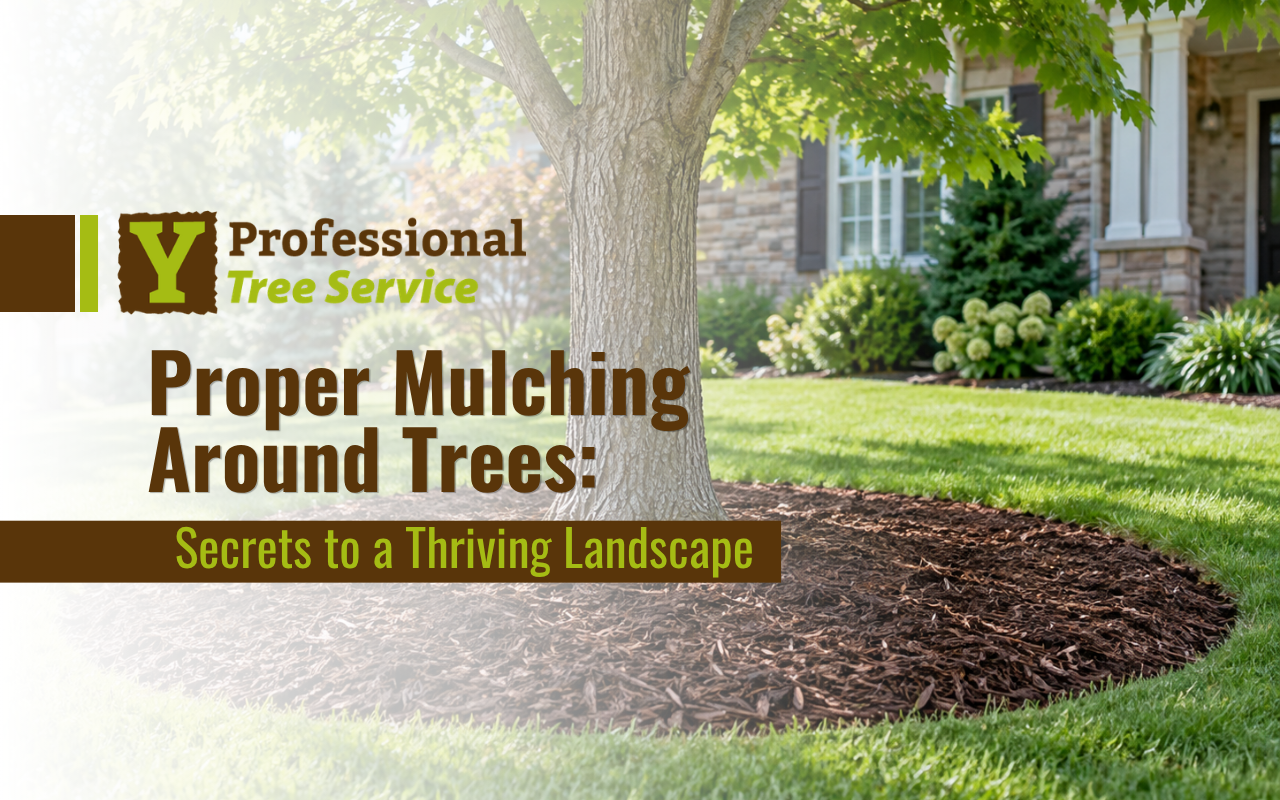
A healthy landscape starts with the soil around your trees. At Y Professional Tree Service, we encourage simple care habits that protect roots without covering the trunk. Proper mulching around trees helps hold soil moisture, limit weeds, and reduce temperature changes when you apply the right material at the right depth.
This guide explains mulch depth, material choices, and common mistakes homeowners can avoid. You can also include mulch checks in your fall tree preparation routine. The goal is a wide, even layer that supports the root area while leaving the base of the tree clear.
Protecting Tree Roots With a Balanced Mulch Layer
Tree roots need both moisture and oxygen. A suitable mulch layer slows evaporation and reduces competition from grass and weeds. It also creates space between the trunk and lawn equipment. However, mulch cannot correct every soil problem, and adding more material does not always give a tree more protection.
With Y Professional Tree Service, you can discuss the conditions around your tree before changing its care routine. Hard soil, standing water, and frequent foot traffic deserve attention. Our guide to soil compaction warning signs explains concerns that a fresh mulch layer alone may not solve.
How Deep Should Mulch Be Around Your Trees?
For many landscape trees, a settled layer of about two to three inches is a practical starting point. General guidance allows two to four inches, depending on the material and soil conditions. Use the lower end for fine mulch or soil that stays wet. Keep the trunk and root flare uncovered.
When checking proper mulching around trees, measure the full layer, including older material underneath. Move a small section aside until you reach the soil surface. Check several places around the ring. If enough mulch remains, spread it evenly instead of adding another layer simply because a new season has arrived.
Recognizing and Correcting Harmful Mulch Volcanoes Around Trunks
A mulch volcano is a tall mound piled against a tree trunk. Although it may look tidy, it keeps bark damp and can encourage decay. Excess buildup can also support unwanted root growth within the mulch. At Y Professional Tree Service, we recommend checking the tree’s base before refreshing any existing ring.
- Pull loose mulch away from the trunk, leaving several inches of clear space.
- Keep the root flare visible where the trunk widens into the main roots.
- Spread excess material outward while maintaining a shallow, even layer.
- Avoid cutting roots or digging into buried bark while correcting the mound.
If you uncover soft bark, unusual roots, or a deeply buried trunk base, stop before digging further. These conditions need closer attention. Moving loose mulch is different from removing soil or roots. A careful assessment can help determine whether the tree has damage that requires more than a simple mulch adjustment.
Choosing Mulch Materials That Suit Your Tree Beds
The best mulch for trees usually comes from organic materials that break down over time. Wood chips, shredded bark, and shredded leaves are useful options. Your choice should account for drainage, material size, and maintenance needs. Color and appearance matter less than keeping the layer loose, shallow, and away from bark.
- Wood chips provide lasting surface coverage and gradually add organic matter.
- Shredded bark works well when spread evenly without forming thick piles.
- Shredded leaves reuse yard material, but need checks for packed or matted areas.
- Pine straw offers lightweight coverage, though it can shift and need redistribution.
Avoid mixing wood mulch into the soil or choosing materials only because they claim to feed trees. Mulch mainly protects the soil surface. Fertilizer needs should be assessed separately. Decorative stone does not provide the same organic matter benefits, so it should not automatically replace organic mulch around a stressed tree.
Applying a Wide Mulch Ring Without Damaging Roots
Begin by checking the existing mulch, soil moisture, and trunk base. Remove weeds carefully without digging through tree roots. Proper mulching around trees works best when the ring covers a useful area of soil rather than forming a small, deep pile. Extend coverage outward where your yard layout allows.
- Find the root flare and keep the trunk base clear.
- Remove excess mulch and gently loosen any matted surface material.
- Spread your chosen mulch in a broad, even ring.
- Measure the total depth, including material already on the ground.
- Check soil moisture underneath before deciding whether watering is needed.
Leave exposed roots intact rather than cutting them to create a smooth bed. Avoid raising the soil level around the tree or installing edging through large roots. A wider ring can reduce mowing near the trunk, but expanding it should not involve deep digging that damages the roots you want to protect.
Maintaining Mulch Through Seasonal Changes and Wet Weather
Check mulch in spring, during dry periods, and after heavy rain. Look for displaced material, deep piles, and damp bark. Refresh only areas that have become thin. Seasonal care does not require removing all decomposed mulch or adding a thicker layer before winter when the existing coverage is already suitable.
Our team at Y Professional Tree Service encourages checking the soil beneath the mulch rather than judging moisture by surface appearance. Persistent wetness, declining foliage, or trunk damage needs further investigation. Our explanation of possible root rot symptoms can help you recognize concerns without assuming mulch caused the problem.
Frequently Asked Questions
How much mulch should I add over an existing layer?
Measure what remains before adding material. Restore a suitable total depth rather than stacking new layers. Include this check in your seasonal tree care plan.
Can mulch fix hard soil around an established tree?
Mulch can support soil conditions over time, but it does not quickly reverse severe compaction. Check our guide to compacted soil before choosing a treatment.
Does wet mulch mean that my tree has root rot?
No. Wet mulch alone cannot confirm a disease. Drainage and other symptoms matter. Our root rot identification guide explains signs that may need further assessment.
Should I remove every old layer before adding mulch?
No. Keep suitable material that is breaking down naturally. Remove excess buildup, redistribute uneven piles, and loosen matted areas carefully. Always check the total depth first.
Can I cover exposed tree roots with extra mulch?
A shallow mulch layer can protect the area around exposed roots. Avoid deep piles or added soil, and never cut roots for appearance. Keep the trunk base and root flare uncovered.
Planning Practical Tree Care for Your Huntsville Property
Proper mulching around trees depends on depth, coverage, and a clear trunk base. These small checks help you avoid common mistakes without making tree care complicated. Start with the existing conditions, choose an appropriate material, and review moisture before adding mulch or changing your watering routine.
If you need a tree care service in Huntsville AL, our team at Y Professional Tree Service can discuss your concerns. Share photos of the trunk base, mulch ring, and surrounding soil through our tree care contact page. Explain any changes you have noticed so we can discuss the next step.