
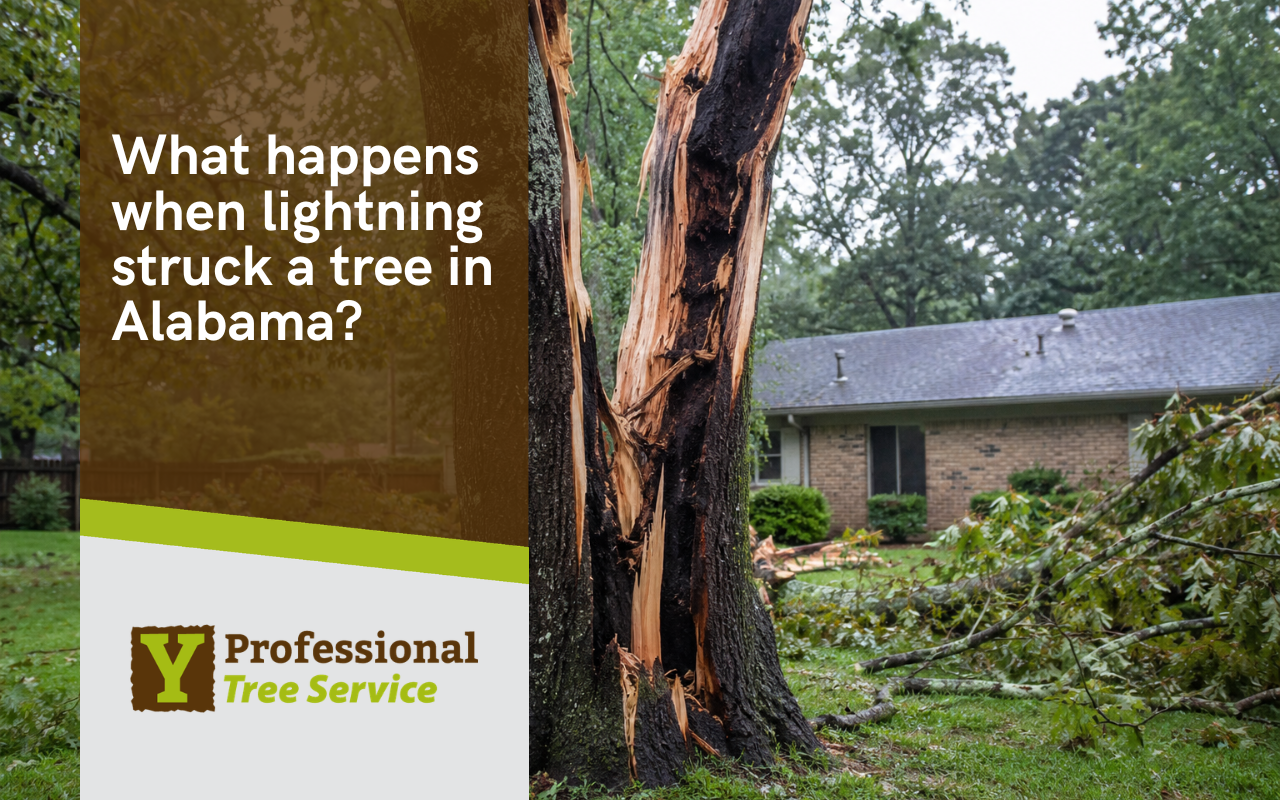
When lightning struck a tree in Alabama, the safest next step is distance, inspection, and risk review. A damaged tree may survive, but split wood, hanging limbs, smoke marks, or root stress can make the tree unsafe near homes, driveways, and walkways.
What happens when lightning struck a tree in Alabama?
A lightning-damaged tree is a tree that absorbed electrical force through its trunk, limbs, roots, or wet bark. Homeowners need this service when storm damage may affect safety, structure, or nearby property. The goal is to identify danger early and prevent falling limbs or trunk failure.
Review storm recovery guidance and keep people away from the area.
Lightning struck a tree in Alabama reveals urgent risks
A lightning strike can turn a healthy tree into a safety concern within seconds. The damage may look dramatic, but the most important question is whether the trunk, limbs, roots, or nearby targets are now unsafe.
At Y Professional Tree Service, we look first for immediate hazards. These include broken limbs, leaning movement, fresh cracks, smoke, loose bark, or debris near a home. According to the National Weather Service, no outdoor place is safe when thunderstorms are nearby, so stay inside until the storm has passed.
- Keep children and pets away from damaged trees.
- Do not touch limbs near utility lines.
- Watch for fresh leaning or cracking sounds.
- Call for help when large limbs hang overhead.
Split trunk after lightning signals deeper structural concerns
A split trunk after lightning is more than a visible scar. The open wood may show where energy moved through the tree, but the hidden weakness can extend above, below, and around the visible wound.
Some trees close small wounds over time. However, a long trunk split can expose inner wood to decay, insects, and moisture. When customers call Y Professional Tree Service, we ask what changed after the storm, where the tree stands, and whether branches are over a roof, fence, car, or sidewalk.
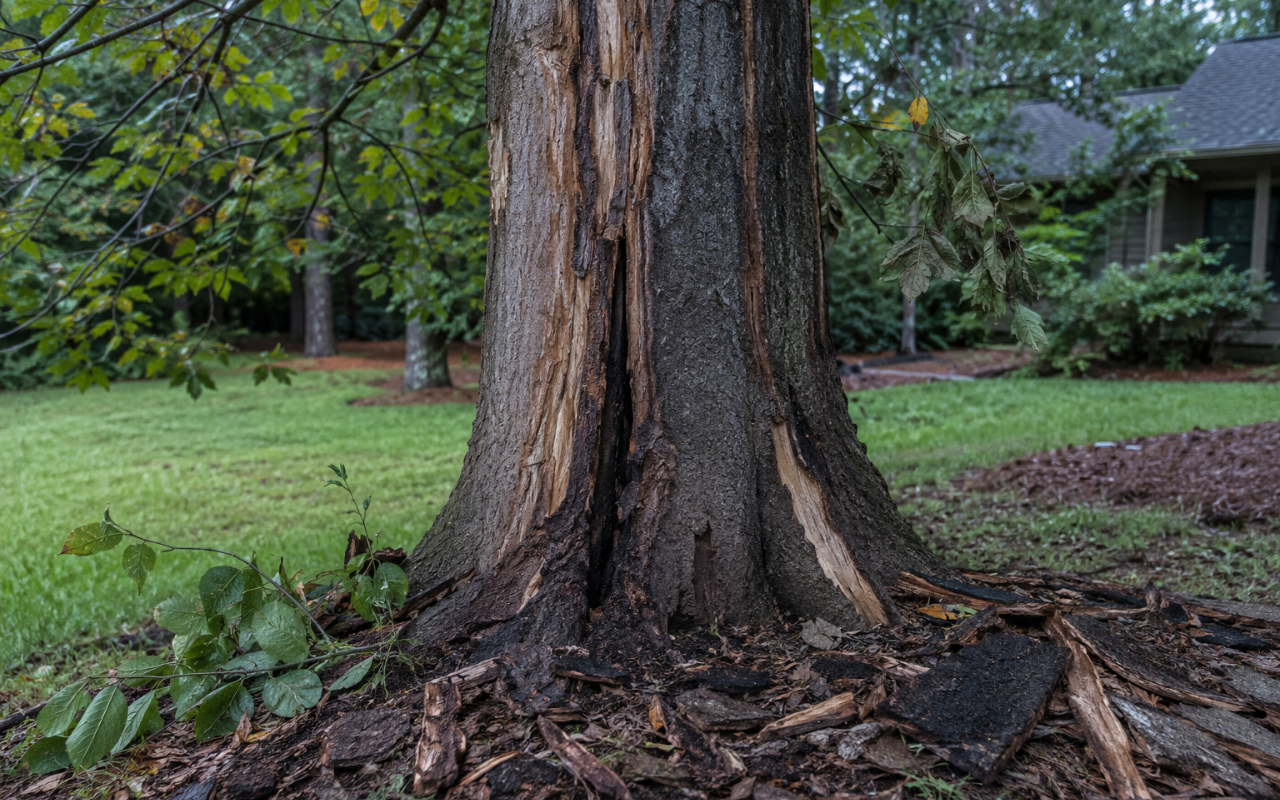
A split trunk after lightning should be treated as a structural warning sign, especially when the crack reaches the base. For safer planning, homeowners can also review safe removal planning before touching storm debris.
Hidden tree damage signs guide safer inspection decisions
Hidden tree damage signs often appear after the first storm cleanup is done. A tree can look stable from one side while internal wood, limb joints, or roots are weakened by the electrical path.
The Alabama Cooperative Extension System explains that lightning can injure trees in ways that need monitoring, treatment, or removal. We check for damage that is not obvious from the ground, because delayed failure can happen after wind, rain, or drying stress.
- Loose bark strips along the trunk
- Dead leaves on one side of the canopy
- Cracks beneath major limb unions
- Mushrooms or soft wood near the base
- Fresh soil lifting around roots
With Y Professional Tree Service, you get a practical review before deciding whether the tree can stay, needs pruning, or creates too much risk.
Careful assessment clarifies whether removal is truly necessary
Not every lightning-damaged tree must be removed. The right decision depends on tree species, wound size, trunk strength, root condition, target risk, and how close the tree stands to people or property.
Many homeowners ask if they should remove lightning struck tree damage right away. The answer depends on what the tree can still support safely. Our crew at Y Professional Tree Service checks the tree’s lean, canopy balance, cracks, decay signs, and location before explaining practical options.
Removal may be the safer choice when:
- The trunk is split into unstable sections.
- Large limbs hang above active areas.
- Roots show lifting or separation.
- The tree leans toward a home or road.
- Decay is visible inside the wound.
If the tree can be preserved, pruning, cleanup, and monitoring may reduce risk without removing the full tree.
Professional booking steps prepare safer storm recovery work
A clear process helps homeowners feel prepared after storm damage. When you contact us, we first gather basic details, review the visible risk, and explain the safest next step before any work begins.
When you contact Y Professional Tree Service, we may ask for the tree location, visible damage, nearby structures, power line concerns, and access details. Photos can help us understand the situation, but they do not replace an on-site inspection when the tree may be unstable.
- Share what happened during the storm.
- Explain where the tree stands on the property.
- Keep people away from the damaged area.
- Allow trained workers to inspect hazards.
- Review safe pruning, cleanup, or removal options.
For urgent danger near homes, driveways, or public areas, use urgent tree response to request help.
Emergency tree removal in Huntsville, AL protects nearby property
Emergency tree removal in Huntsville, AL becomes important when a damaged tree threatens people, buildings, vehicles, or access points. Fast action matters most when a trunk is split, limbs are hanging, or power lines may be involved.
Storm-damaged trees can hold hidden tension in branches and trunks. Cutting without the right plan can release that force suddenly. That is why homeowners should avoid climbing, pulling, or chainsaw work near unstable wood. A safer response starts with keeping distance and calling trained help.
If the tree blocks access, leans toward a structure, or drops heavy limbs, contact talk with our team for guidance. Clear details help us understand the urgency and prepare the right equipment for the property.
Frequently Asked Questions
Can a lightning struck tree survive after major trunk damage?
Yes, some trees survive after lightning damage, but survival depends on wound size, root health, canopy condition, and location risk. A tree near a home or driveway needs careful inspection. Review property safety tips before deciding what to do next.
What signs show hidden damage after a tree strike?
Hidden signs include bark separation, dead leaves on one side, soft wood, new cracks, weak limb joints, and soil movement near roots. These signs can appear days or weeks later. Keep watching the tree after storms, especially if the trunk was already split.
Should I leave a damaged tree standing overnight?
Leave the area alone if the tree is not creating immediate danger, but do not walk, park, or sit below it. If limbs are hanging or the trunk is leaning, request local emergency help before conditions worsen.
Who checks a tree after lightning hits the trunk?
A trained tree care professional should inspect the trunk, limbs, roots, canopy, and nearby targets. The inspection should focus on safety, not only appearance. Photos are useful for the first conversation, but unstable trees often need an in-person review.
When should homeowners ask for storm damage help?
Homeowners should ask for help when a tree leans, cracks, drops limbs, touches lines, blocks access, or stands near property. Waiting can increase risk after more rain or wind. Use schedule an inspection to discuss the safest next step.
Protect your property with clear storm damage guidance
Lightning damage deserves careful attention, not guesswork. If a tree looks split, unstable, burned, or unsafe after a storm, keep people away and let us review the risk. For local help, start with request tree help and share what you see before the damage gets worse.