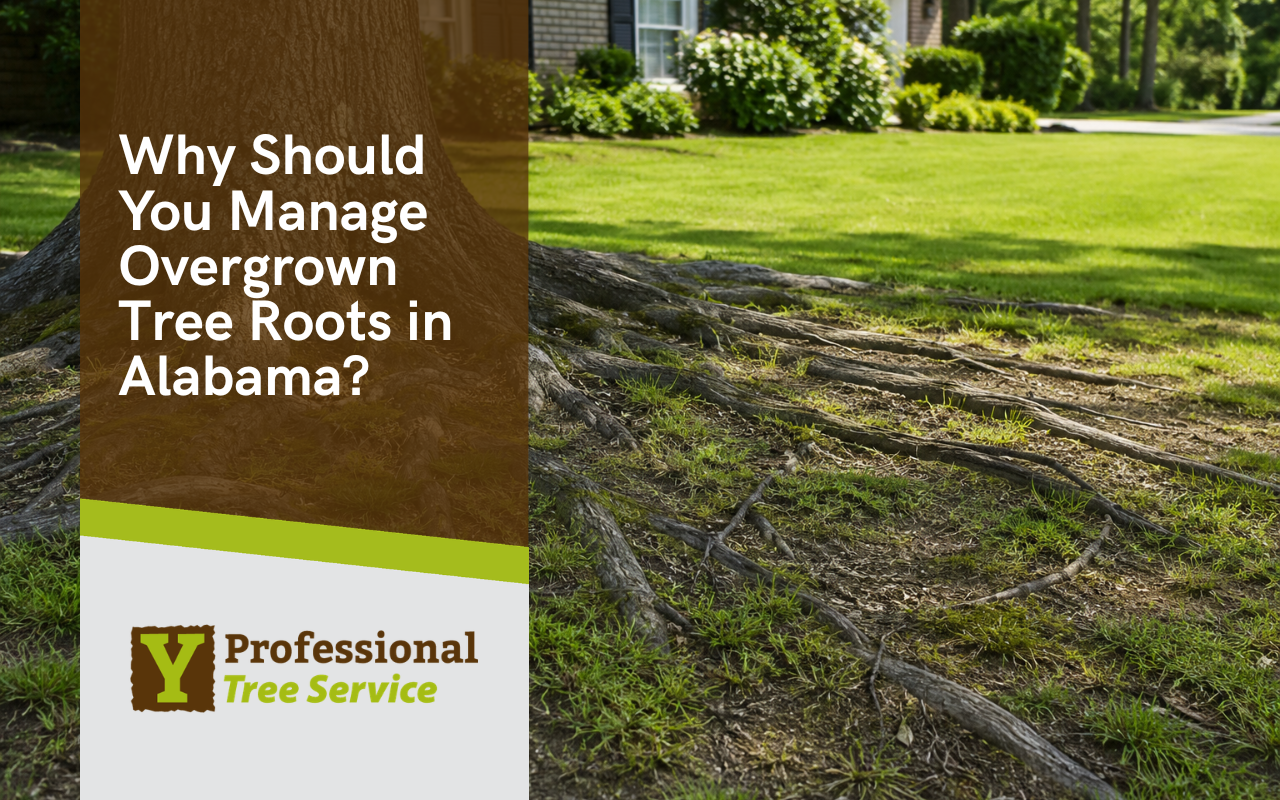
Overgrown tree roots in Alabama should be managed because they can lift sidewalks, damage lawns, and affect nearby structures. The safest plan protects the tree, checks the root system, and handles problem areas before pavement, turf, or property features become harder to repair.
Why Should You Manage Overgrown Tree Roots in Alabama?
Root management is the careful inspection, pruning, protection, or removal of roots that interfere with lawns, sidewalks, patios, and driveways. Homeowners need it when roots grow above the soil, push against concrete, or compete with grass. The goal is safer outdoor space without harming healthy trees.
Review our How to Maintain Healthy Trees Year-Round: Expert Tips before the damage gets worse.
Spot Tree Roots Lifting Sidewalk Before Damage Spreads
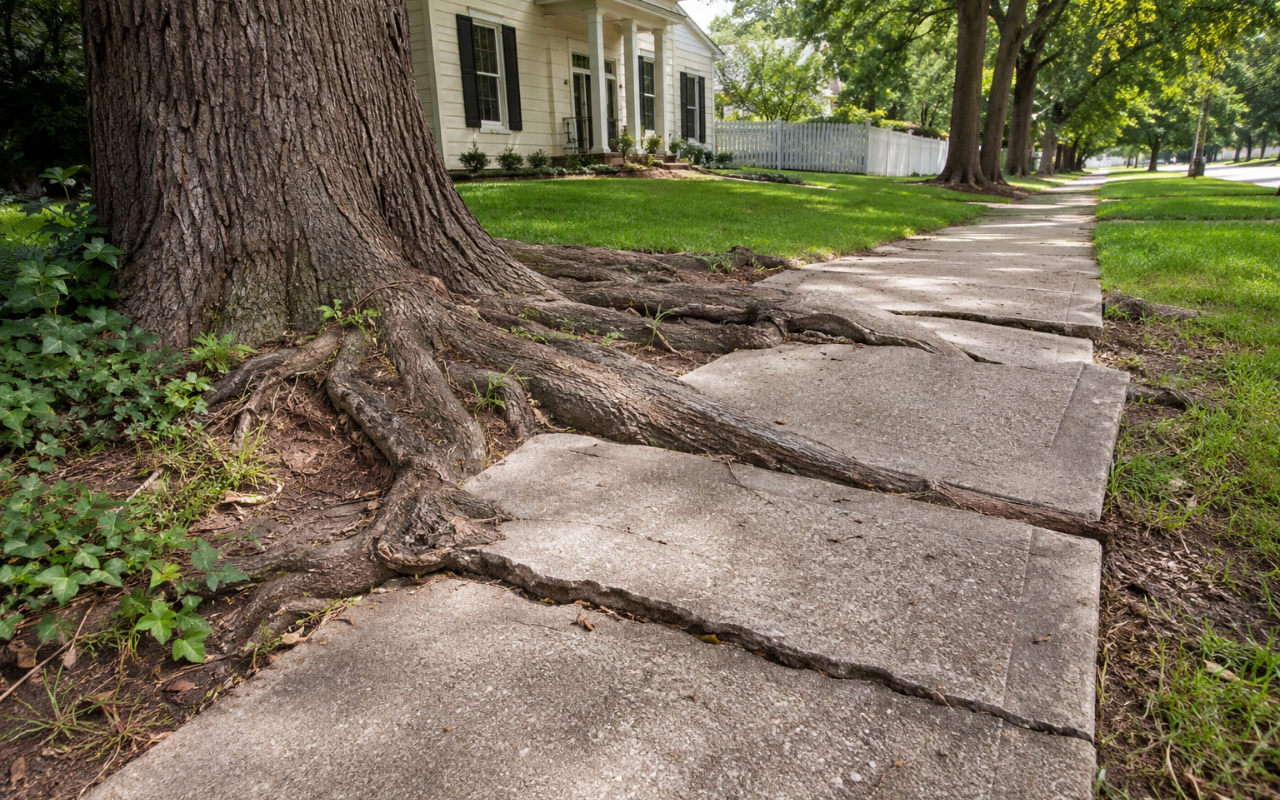
Raised concrete, cracked pavers, and uneven walking areas are common signs that roots are pressing upward. Tree roots lifting sidewalk sections can create trip risks and make routine yard use stressful, especially near driveways, entry paths, and public walking areas.
At Y Professional Tree Service, we look at the tree, soil, root direction, and nearby hardscape before suggesting the next step. Some situations may need root pruning. Others may need concrete repair, a root barrier, or full tree evaluation.
- Sidewalk slabs start to tilt or separate.
- Cracks form near the tree side first.
- Roots appear along pavement edges.
- Water collects around lifted concrete.
If the tree looks unstable or the pavement is badly raised, review safe options through our Tree Removal | Benefits & Costs page.
Reduce Surface Roots Lawn Damage With Better Soil Care
Surface roots lawn damage often happens when roots grow close to the topsoil and compete with turf. Thin grass, exposed woody roots, and mower trouble are clear signs that the lawn and tree roots need a better care plan.
Alabama yards can face compacted soil, shallow watering, and heat stress. These conditions may push roots toward the surface. According to Penn State Extension, turfgrass can compete with tree roots for water and nutrients. A proper mulch ring can also protect roots from mower damage.
Use simple care steps before choosing aggressive work:
- Add mulch away from the trunk.
- Water deeply instead of lightly.
- Aerate compacted soil when needed.
- Avoid cutting exposed roots with mowers.
- Keep heavy equipment off root zones.
With Y Professional Tree Service, you get guidance that respects tree health and yard safety. Healthy roots support stronger trees, while poor root handling can weaken stability.
Decide When To Cut Tree Roots Safely Near Structures
Root cutting should only happen after checking root size, tree condition, and distance from the trunk. Knowing when to cut tree roots safely helps prevent decline, leaning, disease entry, and long-term structural weakness.
Large support roots should not be removed without expert review. Cutting the wrong root can change how the tree anchors itself. TreesAreGood explains that pruning must consider tree biology because improper cuts can cause lasting damage.
When customers contact Y Professional Tree Service, we ask where the root is located, what it is affecting, and whether the tree shows stress. Then we explain whether pruning, barrier work, stump grinding, or removal is the safer path.
Never cut roots only because they are visible. Instead, check for lifting pavement, damaged turf, drainage issues, and tree movement. These details help decide whether action is needed.
Compare Root Barriers Pruning And Removal Options Carefully
Different root problems need different solutions. Root barriers can redirect growth, pruning can reduce selected roots, and removal may be needed when the tree or root system creates ongoing risk near structures.
A root barrier is usually placed between the tree and the damaged area. It can help guide future growth away from sidewalks or foundations. Root pruning may help when one section causes pressure. Stump grinding may be useful when a removed tree still leaves roots and a stump behind.
- Root pruning works for limited, selected roots.
- Root barriers help protect hardscape areas.
- Soil improvement supports deeper root growth.
- Stump grinding clears leftover stump problems.
- Tree removal may fit high-risk cases.
For leftover stump concerns, see our Stump Grinding Services: Remove Tree Stumps Fast page.
Prepare For A Tree Root Removal Service Appointment
A tree root removal service in Birmingham, AL should begin with a clear review of the affected area. The appointment should help you understand the root problem, the risks, and the safest next step before work begins.
At Y Professional Tree Service, we start by asking what the roots are damaging and where the issue appears. Photos, property details, and nearby structures help us understand the concern before the on-site review.
- We review the root location and visible damage.
- We check the tree’s condition and surrounding soil.
- We explain practical options before work begins.
- We discuss cleanup and next care steps.
Before any work starts, ask about tree stability, buried utilities, hardscape damage, and recovery care. These questions help protect your property and reduce avoidable surprises.
Frequently Asked Questions
Can tree roots lifting sidewalk become a safety issue?
Yes, raised sidewalk sections can become a trip hazard and may worsen as roots expand. The safest step is to inspect the tree, concrete, and soil together. For larger risk concerns, review Tree Removal | Benefits & Costs.
What causes surface roots lawn damage around mature trees?
Surface roots can appear when soil is compacted, watering is shallow, or the tree species grows near the surface. Grass may thin because roots compete for moisture and nutrients. Mulch, aeration, and better watering often reduce stress.
When should I avoid cutting tree roots myself?
Avoid cutting roots near the trunk, large roots, or roots close to structures without guidance. Those roots may support the tree. For care habits that reduce future root stress, visit How to Maintain Healthy Trees Year-Round: Expert Tips.
Does root removal always mean removing the whole tree?
No, root removal does not always require removing the tree. The answer depends on root size, location, tree health, and property risk. Sometimes pruning, soil care, or barriers solve the issue. In other cases, removal may be safer.
Who should inspect roots near driveways or foundations?
A trained tree care team should inspect roots near hard surfaces, foundations, or utilities. With Y Professional Tree Service, you can request guidance through our Contact Us page before choosing root cutting, barriers, stump grinding, or removal.
Start Safer Root Care With Clear Next Steps
Overgrown tree roots in Alabama should be handled with care, not guesswork. At Y Professional Tree Service, we check the visible damage, explain safe choices, and help you protect your lawn, walkways, and trees. To discuss overgrown tree roots in Alabama, reach out through Contact Us and ask about the best next step for your property.