After heavy wind or rain, the safest first step is not cutting. It is looking for danger from a safe place. Homeowners and property managers can reduce risk by learning what to check, what to avoid, and when to ask for Stormproofing Trees in Alabama guidance.
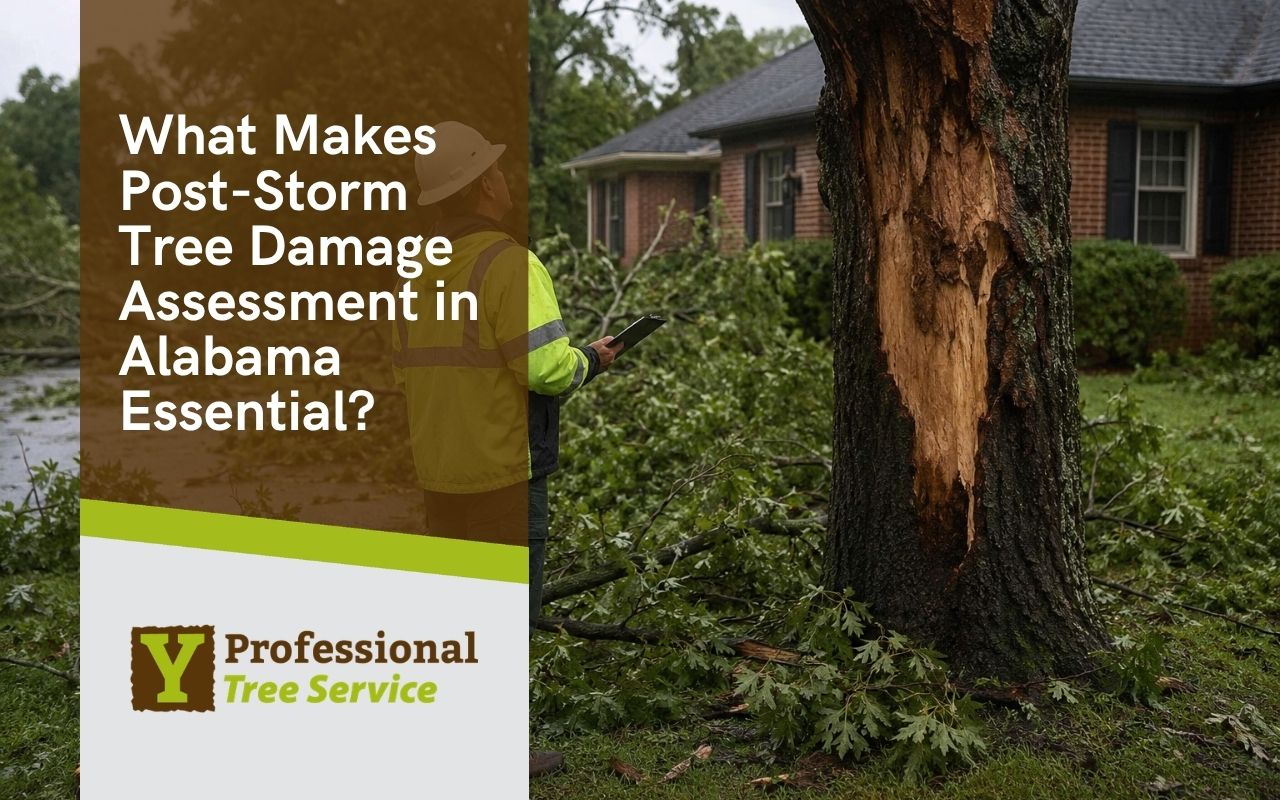
What Makes Post-Storm Tree Damage Assessment in Alabama Essential?
Post-storm tree damage assessment in Alabama helps property owners find unsafe limbs, leaning trunks, root movement, and hidden damage before trees fall or cause more harm. For the next safe step, review Safe Tree Removal Tips before touching damaged trees.
After severe weather, tree assessment involves checking branches, trunks, roots, nearby structures, and access areas. Homeowners, communities, and property managers need it when storms leave broken limbs, leaning trees, or blocked paths. The goal is to prevent injuries, protect property, and decide whether pruning, support, or removal is the safest next step.
Identifying Broken Branch Hazards Reduces Immediate Property Risk
Broken limbs are one of the first hazards to check after severe weather because they can hang above roofs, cars, sidewalks, and yards. A branch that looks still may move later when wind returns or when the weight shifts.
For broken tree branch safety after storm conditions, keep people away from the drop zone. Do not pull, shake, or cut large hanging limbs from the ground. At Y Professional Tree Service, we look for split wood, torn bark, trapped branches, and limbs under tension before we suggest the next step.
- Stay away from hanging limbs above walkways or parking areas.
- Check for branches resting on fences, gutters, or wires.
- Look for cracks where limbs connect to the trunk.
- Keep children and pets away until hazards are reviewed.
Alabama Cooperative Extension notes that post-storm tree debris can block roads and foot traffic. That makes early review important for both private yards and shared spaces.
Checking Tree Stability Reveals Hidden Storm-Related Root Weakness
Tree stability depends on the trunk, root plate, soil, and canopy balance. After a thunderstorm, soft ground and heavy wind can loosen roots even when the tree still stands upright.
Knowing how to check tree stability after thunderstorm damage starts with distance. Walk around the tree only if the area is clear. Look for raised soil, fresh cracks near the base, exposed roots, or a trunk that leans more than before. Soil movement near the trunk often signals root stress.
With Y Professional Tree Service, customers can explain what changed after the storm. We ask about lean direction, nearby targets, broken limbs, and access issues. Then we review whether the tree needs monitoring, pruning, support, or Safe Tree Removal Tips before work begins.
- Small broken limbs may allow pruning and recovery.
- Fresh trunk splits usually need professional review.
- Raised roots may point to loss of ground support.
- Leaning toward a home needs urgent attention.
Planning Partial Fallen Tree Removal Protects People First
A partly fallen tree can be more dangerous than a tree already on the ground. Pressure can be trapped in the trunk, limbs, or roots, and that pressure may release suddenly during cutting.
Partial fallen tree removal steps should begin with a safety check, not a chainsaw. Stay clear of the trunk, root ball, and branches under pressure. If the tree touches a structure, vehicle, fence, or power line, avoid contact and request help. OSHA lists falling branches, chainsaws, woodchippers, and energized lines as major tree care hazards.
When customers contact Y Professional Tree Service, we first ask where the tree fell, what it is touching, and whether access is blocked. Then we help decide if the situation needs scheduled removal or Emergency Tree Removal in Huntsville AL support.
- Do not cut loaded branches without proper training.
- Keep vehicles away from unstable root plates.
- Take photos from a safe distance for review.
- Report downed power lines to the proper utility.
Choosing Professional Removal Supports Safer Birmingham Recovery
Some storm damage tree removal in Birmingham, AL requires trained crews because the tree may be leaning, tangled, split, or close to structures. Professional review helps prevent rushed decisions that create more damage.
Large trees often need rigging, staged cutting, controlled lowering, or equipment planning. A homeowner may see one fallen limb, while the crew may also check trunk cracks, canopy weight, and root stability. The safest choice depends on what the tree could hit next.
With Y Professional Tree Service, we explain what we can see before work begins. We do not want customers guessing around damaged trees. Instead, we review the risk, discuss practical options, and guide the next step based on the tree’s condition and surroundings.
Professional removal may be needed when:
- A tree leans toward a house, road, or driveway.
- Branches hang over areas people must use.
- The trunk has a deep split or fresh crack.
- The tree is tangled with another tree.
Following A Clear Assessment Process Improves Storm Decisions
A clear process helps property owners move from stress to action. The right order is simple: stay safe, document damage, share details, review risks, and choose the safest next step.
After a booking request, we ask for the property location, tree type if known, visible damage, nearby structures, and photos when available. During the appointment, we check branch damage, trunk condition, lean direction, root area, and access for equipment. Before work begins, we explain the recommended approach and what the customer should avoid.
- Share photos and describe the storm damage.
- Keep people away from unsafe areas.
- Review nearby targets like roofs, cars, and wires.
- Choose pruning, monitoring, support, or removal.
- Confirm cleanup needs after the work is complete.
At Y Professional Tree Service, we focus on practical guidance. Some trees can recover with proper care. Others become unsafe after wind, rain, and root movement. Post-storm tree damage assessment in Alabama gives property owners a safer way to decide.
Frequently Asked Questions
When should I inspect trees after a strong storm?
Inspect trees after the weather clears and the area is safe. Start from a distance and look for broken limbs, leaning trunks, raised soil, or blocked access. For prevention planning, review Stormproofing Trees in Alabama before the next storm season.
Can a storm-damaged tree recover without being removed?
Yes, some storm-damaged trees can recover if the trunk, main limbs, and roots remain stable. Recovery depends on damage size, tree health, canopy loss, and decay signs. A careful post-storm tree damage assessment in Alabama helps separate repairable damage from unsafe failure risk.
What signs show a tree may fall later?
Warning signs include fresh leaning, soil lifting, root cracks, trunk splits, fungal growth, and large broken limbs. A tree can look calm after a storm but still be unstable. Learn more safe decision points through Safe Tree Removal Tips.
Should I cut a partly fallen tree myself?
Do not cut a partly fallen tree if it is under pressure, touching wires, resting on a structure, or too large to control. Loaded wood can move fast when cut. For urgent situations, use Emergency Tree Removal in Huntsville AL guidance.
How can communities organize safer storm cleanup efforts?
Communities can assign safe observation zones, document hazards, mark blocked paths, and report dangerous trees. Volunteers should avoid chainsaw work unless trained. Shared notes, photos, and priority areas help professionals respond faster and reduce confusion after major Alabama storms.
Schedule Safer Tree Help Before Damage Spreads
Storm damage can change quickly when soil stays wet or wind returns. If you see leaning, hanging limbs, split trunks, or blocked access, request a careful review before anyone starts cutting. For help with post-storm tree damage assessment in Alabama, contact Schedule a Tree Review and share what you can see from a safe distance.