
Storm-proofing trees in Alabama involves inspecting trunks, branches, roots, and soil before severe weather arrives. Proper pruning, drainage care, and early hazard detection can reduce avoidable failures. However, no treatment can make a tree completely stormproof.
Alabama storms can combine strong winds with heavy rainfall and saturated soil. This combination increases pressure on tree canopies and root systems. At Y Professional Tree Service, our professional tree services address visible defects, damaged limbs, and other concerns before conditions become urgent.
Early Preparation Reveals Hidden Tree Hazards
A tree may appear healthy while containing structural weaknesses. Internal decay, narrow branch unions, damaged roots, or an unbalanced canopy may remain difficult to identify from the ground. Severe weather can expose these problems quickly.
The International Society of Arboriculture explains that preventive care may include identifying branch, trunk, and root defects. It may also involve removing dead or defective branches and correcting damage caused by improper practices such as topping.
Begin preparation several weeks before Alabama’s severe-weather periods whenever possible. Early action provides time to inspect trees, schedule appropriate care, and avoid rushed decisions during a storm warning.
Visible Warning Signs Support Timely Decisions
A storm tree inspection should examine the entire tree and its surroundings. Trunk defects matter, but the roots, soil, canopy, and potential targets also influence risk.
| Warning sign | Possible concern | Recommended response |
|---|---|---|
| Dead or hanging branch | Branch may fall during wind | Restrict access and arrange an evaluation |
| Fresh trunk crack | Structural separation or internal damage | Request prompt professional attention |
| New lean with lifted soil | Possible root plate movement | Keep people away and request urgent assessment |
| Fungi near the trunk | Possible wood or root decay | Schedule further inspection |
| Exposed or cut roots | Reduced stability or root damage | Avoid further disturbance and seek guidance |
| Branches over structures | Potential impact on roofs, vehicles, or fences | Evaluate branch condition and clearance |
Alabama Cooperative Extension identifies leaning trees with mounded or cracked soil as a serious concern. Wind and rain can rock trees in softened soil, damaging or pulling roots free. A recent lean should never be tested by pushing or pulling the tree.
Key Takeaway: New cracks, hanging limbs, root movement, and lifted soil deserve attention before another storm increases the pressure on the tree.
Structural Pruning Reduces Avoidable Branch Failures
Correct pruning can remove deadwood, damaged limbs, and weak branches. It can also improve spacing and reduce excess weight while preserving enough healthy foliage for growth.
Pruning should follow the tree’s natural structure. Removing too much live canopy can reduce energy production and trigger weak, rapid growth. Large or unnecessary cuts may also create pathways for decay.
Avoid topping trees before hurricane season. Topping removes major portions of the canopy and encourages poorly attached sprouts. Although the tree may initially look smaller, the resulting growth can create new structural concerns.
- Remove dead, broken, or hanging branches.
- Address crossing or damaged limbs.
- Preserve the branch collar during proper cuts.
- Avoid removing excessive live foliage.
- Never use topping as storm preparation.
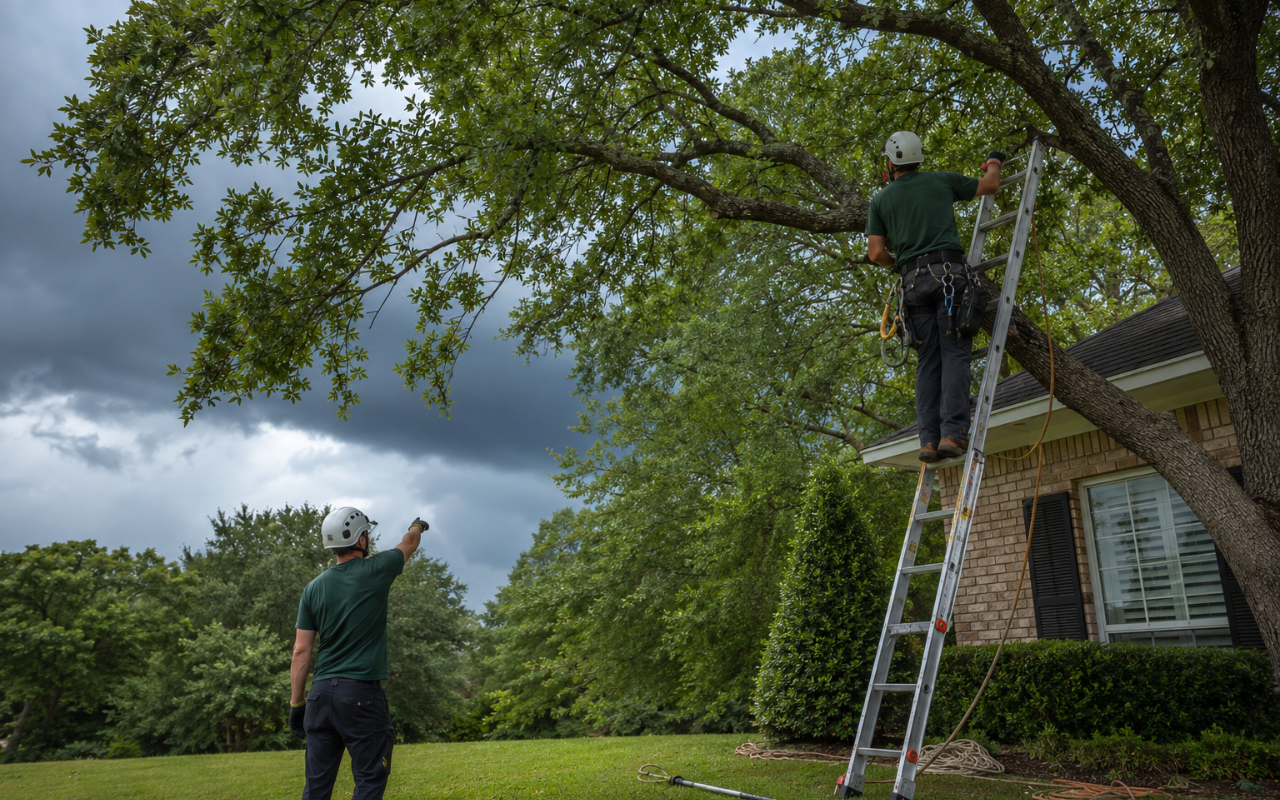
Elevated pruning requires appropriate training, equipment, and fall protection. Homeowners should not climb ladders with chainsaws or attempt to lower large limbs near buildings.
Root and Soil Care Strengthens Tree Support
Roots anchor the tree while supplying water and nutrients. Compacted soil, trenching, erosion, and repeated vehicle traffic can damage that support. Additionally, saturated soil may provide less resistance when wind pushes against a large canopy.
Protect the root zone by keeping vehicles, construction materials, and heavy equipment away. Avoid cutting major roots for walkways, irrigation, or utility work without professional guidance.
Organic mulch can help moderate soil temperature and conserve moisture. University of Minnesota Extension recommends approximately two to three inches of mulch after storm damage. Keep mulch away from direct contact with the trunk to prevent excessive moisture around the root flare.
- Clear blocked drainage paths before heavy rainfall.
- Watch for standing water near the trunk.
- Avoid piling soil over established roots.
- Keep equipment away from the root zone.
- Monitor erosion and exposed roots.
Key Takeaway: Healthy roots need stable, uncompacted soil and adequate drainage. Canopy work alone cannot correct damaged anchoring roots.
Hurricane Preparation Prioritizes Trees Near Targets
During hurricane prep, trees near homes, driveways, fences, patios, roads, and play areas deserve priority. Alabama Cooperative Extension refers to these people and structures as potential targets. Damage becomes more urgent when a tree can strike an occupied or frequently used area.
Inspect large trees near bedrooms, parking spaces, outdoor seating, and property entrances. Pay particular attention to heavy limbs extending over roofs or areas where people regularly gather.
Before severe weather arrives:
- Move vehicles away from questionable trees.
- Remove furniture and play equipment from beneath canopies.
- Secure loose outdoor items.
- Keep people away from visibly damaged areas.
- Report branches touching utility lines.
- Do not begin pruning during high winds.
Never approach a tree or branch touching an electrical line. Contact the utility provider and keep others away from the area. Electrical hazards require specialized training and equipment.
A Pre-Storm Checkup Creates a Clear Action Plan
A pre-storm tree checkup in Alabama should occur before forecasts become urgent. Walk around the property from a safe distance and record visible changes. Photographs can help compare a tree’s lean, cracks, canopy, and surrounding soil over time.
Check each tree from several angles, but never stand beneath hanging limbs. Focus first on trees near buildings, vehicles, utility lines, walkways, and neighboring properties.
- Look for new leaning or soil movement.
- Identify dead and suspended branches.
- Check trunks and major unions for cracks.
- Note fungi, cavities, and soft wood.
- Inspect visible roots for cuts or damage.
- Confirm that drainage paths remain open.
- Document concerns for professional review.
At Y Professional Tree Service, we evaluate visible tree condition, location, canopy balance, and surrounding targets. We then explain which concerns may need pruning, monitoring, or additional action. Request a tree evaluation before weather conditions become unsafe.
Key Takeaway: A structured checkup helps property owners prioritize trees by defect severity, location, and potential consequences.
Post-Storm Safety Comes Before Tree Cleanup
Storm-damaged trees can remain unstable after the weather clears. Hanging branches may fall without warning, while bent limbs can store tremendous tension. Cutting or moving them may cause sudden, unpredictable movement.
Alabama Cooperative Extension advises assessing whether damaged trees threaten people, buildings, power lines, roads, or frequently used areas. Larger and older trees generally require closer attention when damage appears.
University of Minnesota Extension notes that healthy trees with less than 25% canopy damage may often recover. However, this percentage should not replace an on-site evaluation. Trunk cracks, uprooting, major branch loss, and target location can change the recommendation.
After a storm:
- Keep people and pets outside the damaged area.
- Do not stand beneath broken branches.
- Stay away from downed electrical lines.
- Photograph damage from a safe location.
- Contact the utility provider when lines are involved.
- Request professional help for elevated or tensioned wood.
Frequently Asked Questions
When should Alabama homeowners inspect their trees?
Inspect trees seasonally and before severe-weather periods. Arrange another review after strong wind, flooding, construction, root disturbance, or any visible change in lean or structure.
Can pruning guarantee that a tree survives a storm?
No. Proper pruning may reduce weak or damaged branches, but no service can guarantee survival. Storm intensity, soil saturation, hidden decay, roots, and tree structure also matter.
Does every leaning tree require immediate removal?
No. Some trees develop stable natural leans. However, a new lean accompanied by lifted soil, root movement, cracks, or recent storm exposure requires prompt professional evaluation.
What does a storm tree inspection include?
An inspection may review the canopy, major branches, trunk, root flare, visible roots, surrounding soil, and nearby targets. Findings determine whether monitoring or corrective care is appropriate.
What should I do when branches touch power lines?
Keep people away and contact the utility provider. Never touch the tree, branch, tool, or fence nearby because electricity may travel through connected materials and the ground.
Prepare Trees Before Alabama’s Next Storm
Storm-proofing trees in Alabama begins with realistic expectations. Trees cannot become completely stormproof, but inspections, proper pruning, root protection, drainage care, and early hazard management can reduce avoidable risks.
We evaluate trees according to their visible condition, structure, location, and surroundings. To prepare your landscape before the next period of strong wind and heavy rain, schedule your inspection with our team.
References
- Alabama Cooperative Extension: Post-Storm Tree Assessment
- International Society of Arboriculture: Storm-Related Tree Damage
- University of Minnesota Extension: Assessing Damaged Trees