
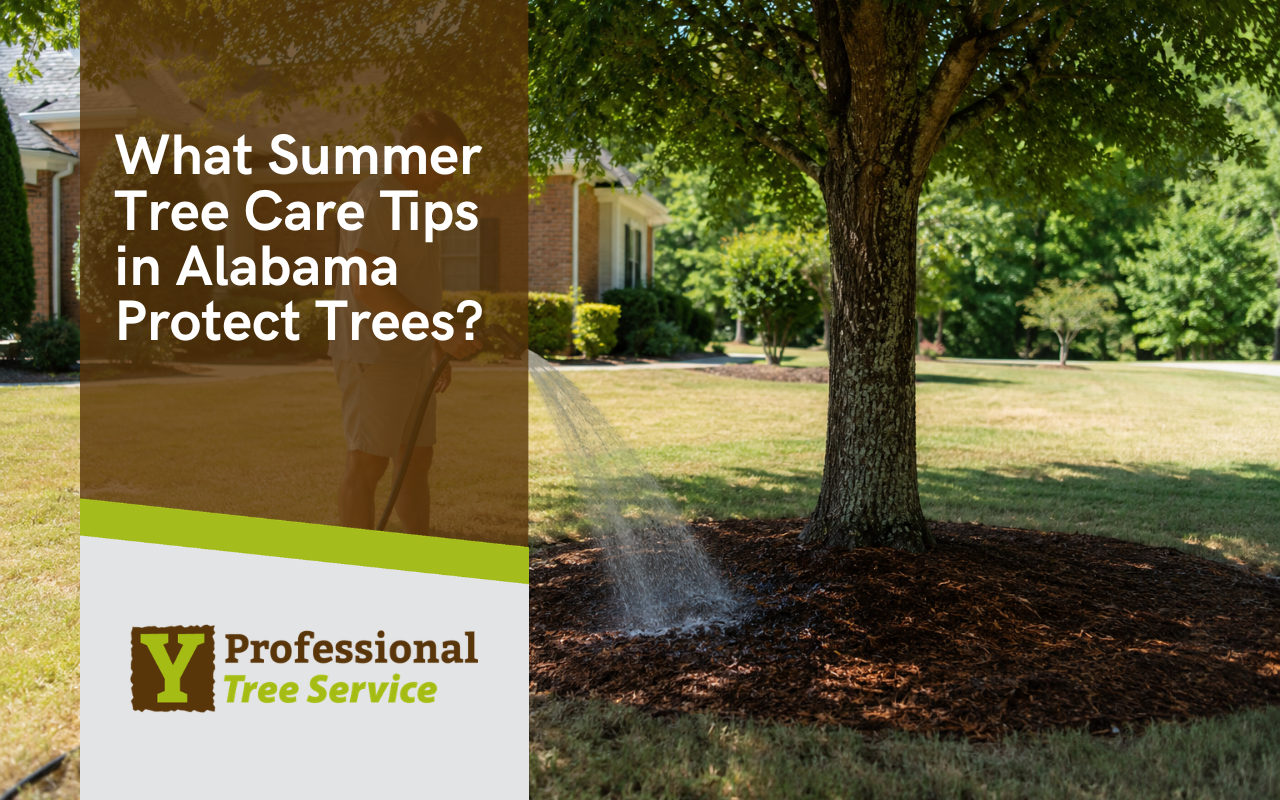
Includes checking soil moisture, watering the root zone deeply, protecting young bark, removing risky limbs, and monitoring leaf color. Homeowners with young trees, mature shade trees, or drought-stressed landscapes need this care to prevent decline, pest infestations, broken limbs, and heat-related damage.
What Summer Tree Care Tips in Alabama Protect Trees?
Summer in Alabama brings unique challenges for trees, from scorching temperatures to prolonged droughts. Without proper care, even healthy trees can suffer from heat stress, sunburn, or pest infestations. This guide will help you identify signs of trouble early and take action to keep your trees thriving all season long.
Summer Tree Care Tips in Alabama: Protect Your Trees from Heat, Drought, and Sunburn
With over 10 years of experience, Y Professional Tree Service knows that deep watering, mulch, light pruning, sun protection, and early stress checks help Alabama trees handle heat, drought, and intense sunlight without lasting damage. Last summer, a family in Birmingham saved their 50-year-old oak by catching early signs of heat stress and adjusting their care routine.
For professional help with trimming, removal, or seasonal maintenance, explore our More Services.
Identify Signs of Heat Stress in Trees Early
Heat stress in trees often appears as wilting, curling leaves, brown edges, yellowing, sparse growth, or early leaf drop. These signs indicate that roots may not be moving enough water to the canopy during hot Alabama afternoons, leaving your tree vulnerable to long-term damage.
Our team at Y Professional Tree Service checks leaf color, branch tips, bark condition, and soil moisture before recommending the next steps. For example:
- A tree that wilts at noon but recovers by evening may need closer monitoring.
- A tree that stays wilted after sunset often requires deeper watering to revive its roots.
Common Signs of Heat Stress:
- Brown leaf edges – Often a sign of drought stress and insufficient water reaching the leaves.
- Cracked bark – Can indicate heat or sun injury, especially on the south or west sides of the tree.
- Early leaf drop – May signal deeper root stress or pest activity.
- Thin canopy growth – A warning that the tree is declining and struggling to photosynthesize.
The Alabama Extension explains that drought reduces soil moisture and can place serious stress on trees. That’s why checking trees often is critical during long dry periods.
Protect Alabama Trees from Sunburn with Smarter Shade
Tree sunburn happens when bark or leaves receive too much direct heat and light, especially after heavy pruning or sudden canopy loss. Young trees and thin-barked species (like maples, birches, or fruit trees) are most likely to suffer bark damage from intense sunlight.
Homeowners asking how to protect trees from sunburn should start with canopy care. Don’t let summer heat turn a small tree issue into a costly disaster—avoid removing too many branches during peak heat, as leaves protect bark from direct afternoon sun. Over-pruning can expose the trunk and larger limbs, making them more susceptible to sunburn and cracking.
When you contact Y Professional Tree Service, we’ll ask about:
- Recent pruning or trimming
- Tree age and species
- Sun exposure and shading
- Visible bark damage or discoloration
Sunburn Prevention Tips:
- Keep enough canopy to naturally shade the bark.
- Use temporary shade cloth for young or newly planted trees.
- Avoid trunk damage from mowers, trimmers, or other equipment.
- Refresh mulch before soil temperatures rise to extreme levels.
Sunburn prevention starts with shade, water, and careful pruning decisions. If you’re unsure about the best approach for your trees, our team can provide a customized plan to protect your landscape.
Water Trees During Alabama Drought with Deeper Soaks
Watering trees during an Alabama drought should focus on slow, deep soaking near the root zone. Shallow watering wastes your time and starves your tree’s roots—here’s the right way to do it. Quick sprays or surface watering only wet the top layer of soil and do little to help roots access the moisture they need. Instead, prioritize infrequent but thorough watering to encourage deep root growth.
Established trees often need deep watering during hot, dry weeks, while young trees may require more frequent attention because their root systems are still developing. Always place water around the drip line (the outer edge of the tree’s canopy), not just beside the trunk. A soaker hose or slow trickle ensures moisture penetrates deeply rather than running off.
With Y Professional Tree Service, you’ll receive clear, tailored guidance based on your tree’s age, soil condition, and visible stress signs. Early morning watering is usually best, as it allows water to soak in before the heat of the day causes rapid evaporation.
Effective Watering Practices:
- Water slowly near the root zone to encourage deep absorption.
- Check soil moisture several inches deep before watering again.
- Avoid shallow daily sprinkling, which promotes weak root systems.
- Adjust watering after heavy rain to prevent over-saturation.
Skip the sprinkler—shallow watering won’t save your tree. Deep soaks build strong roots that survive Alabama’s heat.
Apply Summer Tree Care Tips in Alabama with Confidence
Healthy summer tree care combines mulch, light pruning, pest checks, and soil awareness. Each of these steps lowers stress and helps trees use water more efficiently during periods of heat, humidity, and drought.
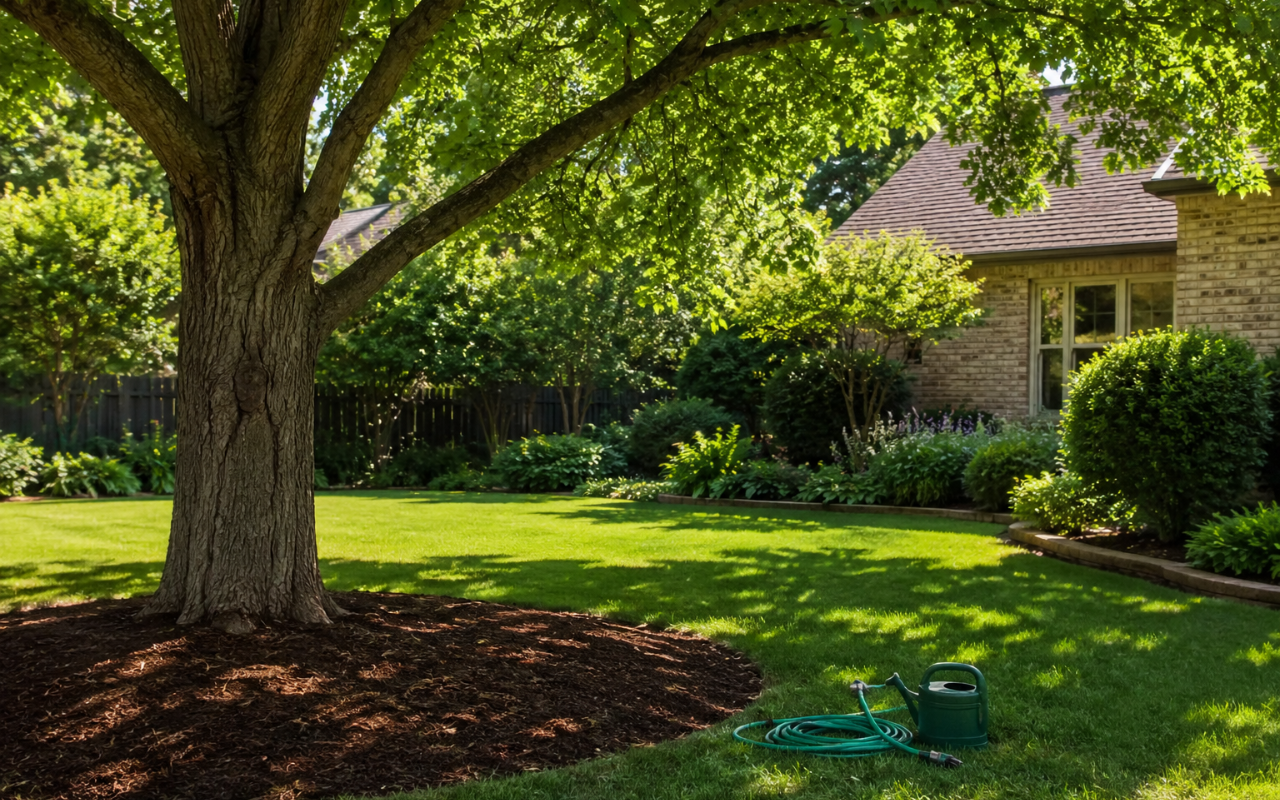
Mulch is one of the simplest yet most effective ways to protect tree roots. Spread a layer of organic mulch (2–4 inches deep) over the root area, but keep it away from the trunk to prevent rot and pest problems. The U.S. Forest Service notes that mulch helps protect plants from heat, cold, and drought while also improving soil health.
Light pruning can be beneficial when branches are dead, diseased, broken, or rubbing against each other. However, heavy summer pruning can increase stress on trees, especially during extreme heat.
During summer checks, look for:
- Holes or boreholes in the bark
- Sawdust-like frass (a sign of wood-boring insects)
- Sticky residue on leaves (indicative of aphids or scale insects)
- Fungal growth (such as mushrooms at the base)
- Sudden dieback in branches or sections of the canopy
Stressed trees attract more pests and diseases, so early action can protect your entire yard.
Prepare for Professional Tree Care Before Summer Damage
A simple, proactive care process helps homeowners understand what to expect before scheduling tree work. The goal is to assess your tree’s condition, explain safe options, and avoid unnecessary stress during extreme heat.
After you contact Y Professional Tree Service, we’ll:
- Review your concerns and ask what changes you’ve noticed in your trees.
- Inspect leaves, bark, limbs, and soil for signs of stress or damage.
- Explain care, trimming, or removal options tailored to your tree’s needs.
- Guide you on next steps after the work is completed.
For tree trimming, removal, or seasonal support, visit our Contact Us page. A professional review is especially important when branches are large, heavy, or overhanging structures.
Frequently Asked Questions
How do I spot heat stress in Alabama trees?
Look for wilting or curling leaves, brown edges, yellowing foliage, early leaf drop, and thin canopy growth. Also, check soil moisture several inches deep—if it feels dry, your tree may need water.
Can sunburn damage bark on young landscape trees?
Yes, sunburn can damage young bark when direct sunlight heats exposed trunk tissue, especially in thin-barked species. Trees are at higher risk after heavy pruning or sudden shade loss. For help with safe trimming choices, review our More Services.
How often should I water trees during drought?
Most trees benefit from slow, deep watering during hot, dry periods, but the exact schedule depends on rainfall, soil type, and tree age. As a general rule, check soil moisture several inches deep before watering again.
Should I prune tree branches during Alabama summer?
Light pruning is acceptable for removing dead, broken, diseased, or unsafe branches. However, avoid heavy canopy removal during peak heat, as this can expose bark to sunburn and increase stress.
When should I call a professional tree crew?
Contact a professional when you notice:
- Large dead limbs that could fall and cause damage
- Leaning trees that may pose a risk to structures or people
- Trunk cracks or splits, which can indicate structural weakness
- Fungal growth (such as mushrooms) at the base of the tree
- Pest activity, like boreholes or sawdust-like frass
- Sudden canopy loss, which may signal a serious health issue
Professional support is also wise before trimming high or hard-to-reach branches. You can explore all our care options on our More Services page.
Schedule Safer Tree Care Before Heat Problems Spread
Summer heat can turn small tree problems into larger risks if left unaddressed. If your trees show signs of stress, dry soil, bark damage, or unsafe limbs, take action before the damage worsens. Start with a simple visual review of your trees, then reach out to our team through Contact Us for clear guidance and practical tree care support. With over a decade of experience, Y Professional Tree Service is here to help you protect your landscape and keep your trees healthy year-round.