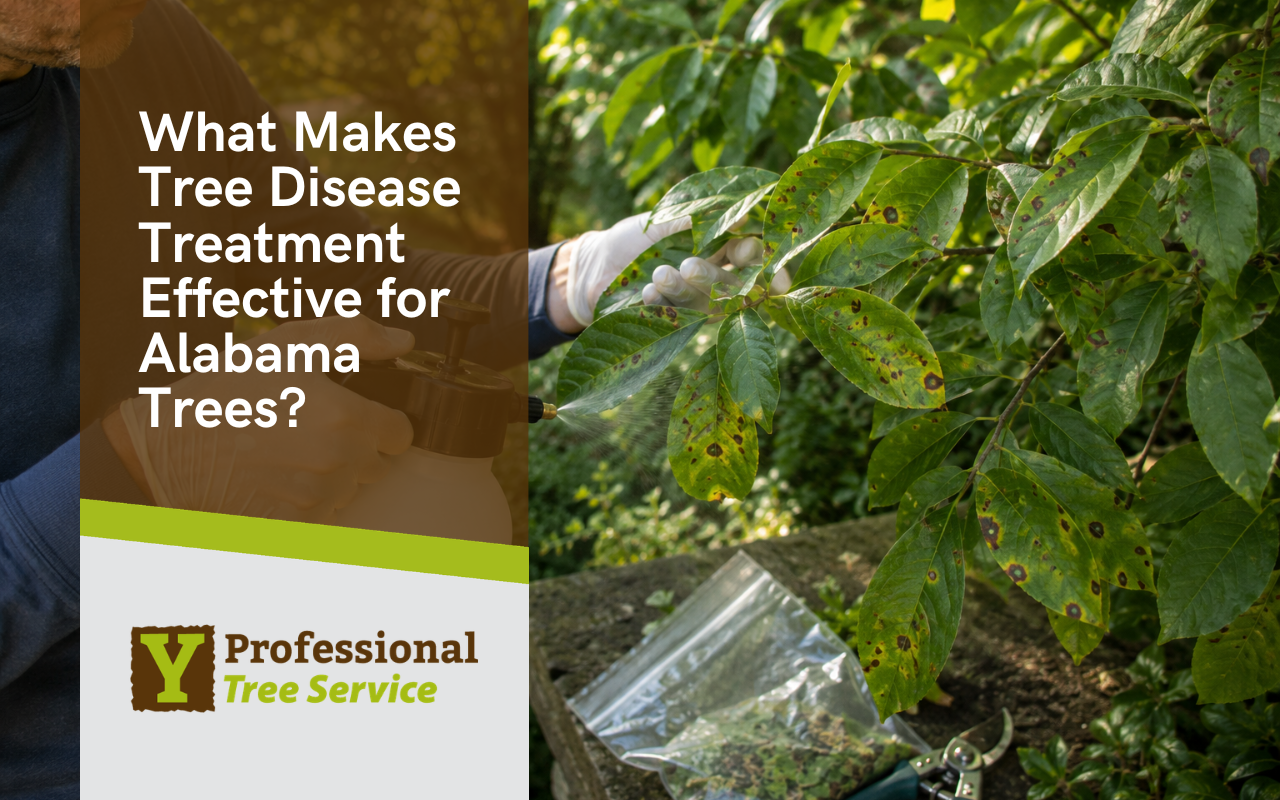
Tree disease treatment works best when symptoms are identified early, the cause is understood, and infected areas are handled correctly. With Y Professional Tree Service, you get clear guidance before disease spreads, weakens limbs, or harms nearby trees.
Start by comparing symptoms with common tree diseases in Alabama. Early action helps protect shade, curb appeal, and nearby healthy trees.
Recognize Early Symptoms Before Tree Damage Spreads Further
Early symptoms help reveal whether a tree needs simple care, closer monitoring, or professional tree disease treatment. Leaf spots, early leaf drop, bark cracks, and weak branches often appear before major decline. Small changes can point to larger health problems inside the tree.
Look for signs that do not match the season. A tree may need attention when leaves wilt despite moist soil, one side declines, or branches die from the tips inward. Common warning signs include:
- Dark or yellow leaf spots
- White powder on leaves
- Cracked, sunken, or oozing bark
- Mushrooms near the trunk base
- Dead twigs in the canopy
At Y Professional Tree Service, we check visible symptoms and explain what those changes may mean before recommending the next step.
Identify Fungal Tree Infection Signs With Clear Checks
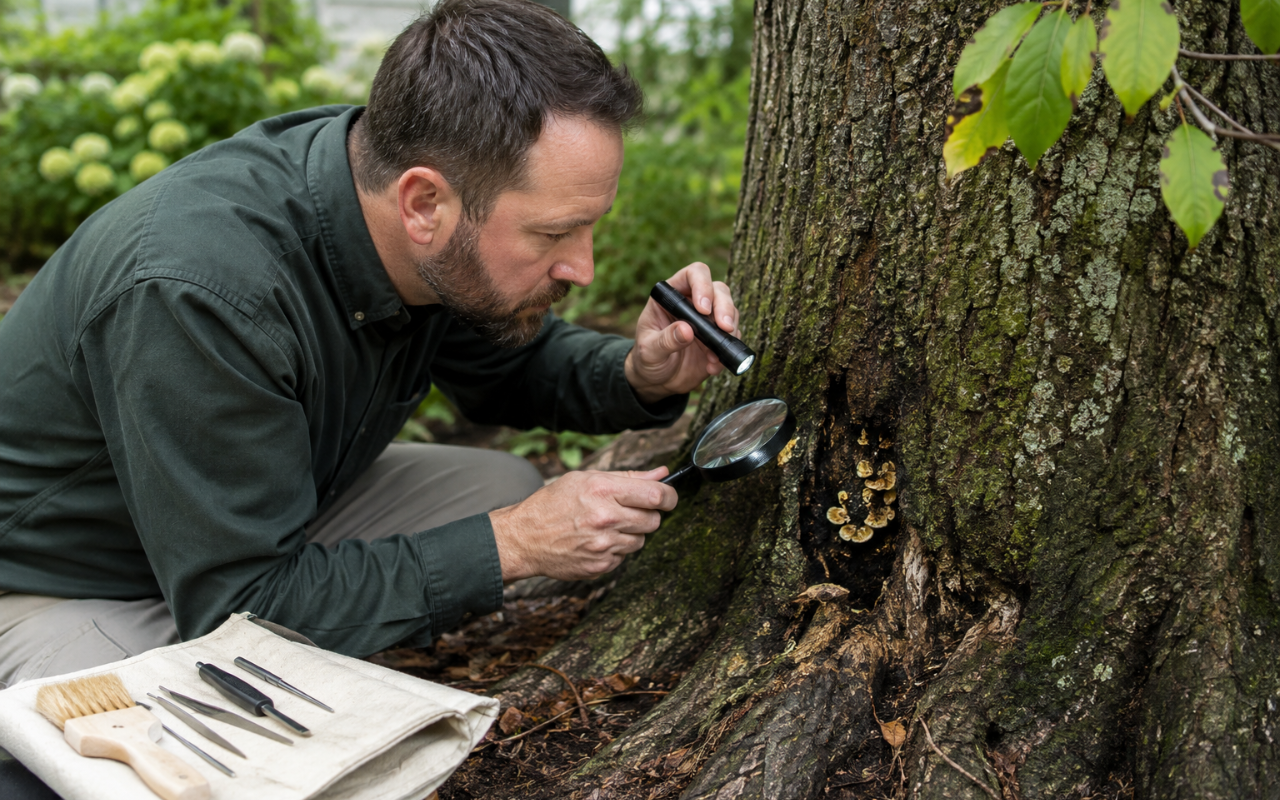
Fungal tree infection signs often appear on leaves, bark, roots, and shaded parts of the canopy. Powdery mildew trees may show white or gray patches, while decay fungi may create mushrooms near the trunk. Correct identification prevents the wrong treatment choice.
Start with a simple inspection. Check the upper and lower leaf surfaces, then look at branch unions and the base of the tree. Powdery mildew usually affects young leaves and tender shoots. According to Alabama Extension, powdery mildew can affect woody shrubs and trees across Alabama.
Other fungal problems may look different. Rust-colored spots, black fruiting bodies, soft wood, or cankers can signal deeper infection. If symptoms are spreading, review diseased tree care steps and ask for help before cutting large limbs.
Prevent Disease Pressure Through Better Tree Care Habits
Prevention lowers the chance that disease will take hold in stressed trees. Good spacing, clean pruning tools, healthy soil, and careful watering all support stronger roots and canopies. Healthy trees resist disease better than stressed trees, especially during hot or humid weather.
Simple care habits can make a big difference. Water near the soil, not over the leaves. Keep mulch away from the trunk. Remove fallen infected leaves when disease is active. Clean tools between cuts so pathogens do not move from one tree to another.
- Prune crowded limbs for airflow
- Avoid overwatering root zones
- Use mulch without trunk contact
- Remove diseased debris from the yard
- Choose tree species suited to the site
For more prevention tips, use our tree disease prevention guide before symptoms become harder to control.
Choose Tree Disease Treatment Steps That Support Recovery
Tree disease treatment should match the disease, the tree species, and the level of damage. Some problems need pruning and care changes. Others may need targeted products or a professional review. Treatment should never begin with guesswork.
When customers contact Y Professional Tree Service, we first ask what symptoms they see, when those symptoms started, and whether nearby trees look affected. This helps narrow the possible cause before any work begins.
Useful treatment steps may include:
- Removing infected leaves or branches
- Disinfecting tools between cuts
- Improving airflow inside the canopy
- Adjusting watering around the root zone
- Using labeled treatments when appropriate
The University of Minnesota Extension notes that fungicides protect healthy growth and are most useful before disease becomes severe. That is why timing matters. Early care gives trees a better chance to recover.
Schedule A Careful Tree Inspection Before Problems Advance
A careful inspection helps decide whether a tree can recover, needs pruning, or requires more advanced care. It also helps answer common questions like how to identify tree disease, what are the common symptoms of tree disease, and how does tree disease spread.
With Y Professional Tree Service, property owners can expect a clear process that starts with practical questions and a visual review. We may ask about watering, recent storms, nearby tree decline, and past pruning.
- First, we review the symptoms you noticed.
- Next, we check leaves, bark, limbs, and the root area.
- Then, we explain likely causes and safe options.
- After that, we recommend a practical next step.
Oak wilt in Alabama, powdery mildew trees, and other disease concerns can spread through spores, insects, tools, roots, or infected debris. If symptoms look active, contact our tree care team before the damage moves farther.
Frequently Asked Questions
How can I tell if my tree is diseased?
Look for leaf spots, wilting, early leaf drop, bark cracks, cankers, mushrooms, or dying branches. One symptom may not confirm disease, but several changes together deserve attention. You can compare signs with common Alabama tree problems before scheduling help.
What causes powdery mildew trees to look white?
Powdery mildew trees look white because fungal growth forms on leaves, stems, or buds. It often appears in humid, shaded areas with poor airflow. The white coating may reduce the tree’s appearance and stress new growth, especially when the infection is heavy.
Can oak wilt in Alabama affect nearby trees?
Oak wilt in Alabama can threaten nearby oaks when disease pathways allow spread. Some diseases move through roots, insects, pruning tools, or infected plant material. If an oak declines quickly, review care for a diseased tree and avoid unnecessary cuts.
When should diseased branches be removed from trees safely?
Diseased branches should be removed when they show cankers, dead tips, fungal growth, or spreading decline. Dry weather is often better for pruning because moisture can help some pathogens move. Clean tools between cuts, and avoid removing large limbs without proper guidance.
How does tree disease spread through a yard?
Tree disease can spread through windblown spores, insects, infected tools, root contact, fallen debris, and poor drainage. Crowded trees are more at risk because air moves poorly through the canopy. Use our tree health prevention tips to reduce future pressure.
Protect Your Trees With Clear Next Steps Today
Tree disease treatment starts with noticing symptoms and asking for the right guidance before the problem grows. When you reach Y Professional Tree Service, we can review what you see, explain practical options, and help you decide whether your tree needs monitoring, pruning, or a closer inspection. Start with our contact our tree care team page.